
Will Wharton (American, 1995) is a media artist and director who uses constructed systems of logic to create playful digital ecosystems that both mirror and challenge our reality. These logic systems originate from a practice of speculative design, creating scenes that would result from an imagined world. The creation of these worlds is an open-ended process in which various mediums and technology are fused in a sort of media alchemy. Everything from virtual reality sculpture to digital stop motion are used to create Wharton’s unique maximalist style. Wharton is based in Los Angeles, California, working between the worlds of live-concert-visuals, fashion, projection mapping and new media art.
How would you describe your artistic practice?
My practice is multidisciplinary, weaving digital processes with physical fabrication to create experiential environments—whether that’s creating hand-drawn stop-motion animation in VR or 3D-printing zoetropes that animate in real life. A lot of that practice has been shaped by my background creating concert visuals in the music industry, where I’ve spent years developing visual languages in response to sound.
Working in that context requires translating something intangible—rhythm, texture, repetition, intensity—into images and motion. There isn’t a literal relationship between sound and image, so the process becomes one of testing different motions, colors, and images against moments in the music, then following my intuition to build an abstract logic for how they interact.
That way of working has carried into my personal practice. I’m interested in creating work that captures something that can’t be expressed in words, only felt.
How are you engaging with new technologies in your work?
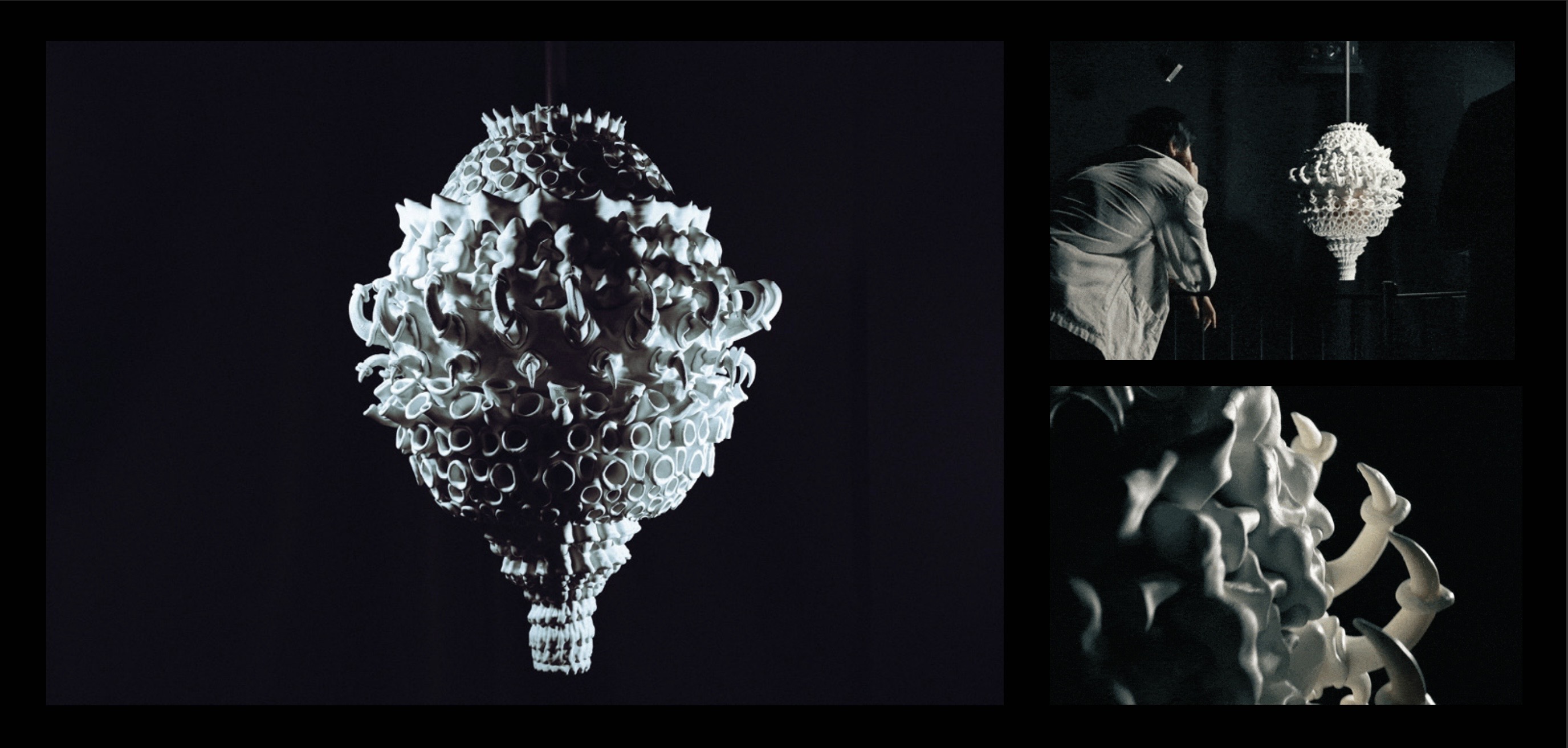
Virtual reality headsets aren’t new at this point, but they’ve been my favorite tool for digital sculpting for the past six years. My frequent collaborator, Hugo Shiboski, and I have developed a number of VR stop-motion techniques and have used them to create sculptural kinetic artworks. I typically physicalize my digital work through 3D printing, then create molds to cast the resulting objects in concrete, silver, or other materials.
The process is fluid and open-ended. I’m less interested in committing to a single medium or technique than in moving between tools as the work develops conceptually. I tend to lose interest in repetitive processes, so experimenting is an important part of how my work continues to evolve.
What interests you artistically about working with AI?
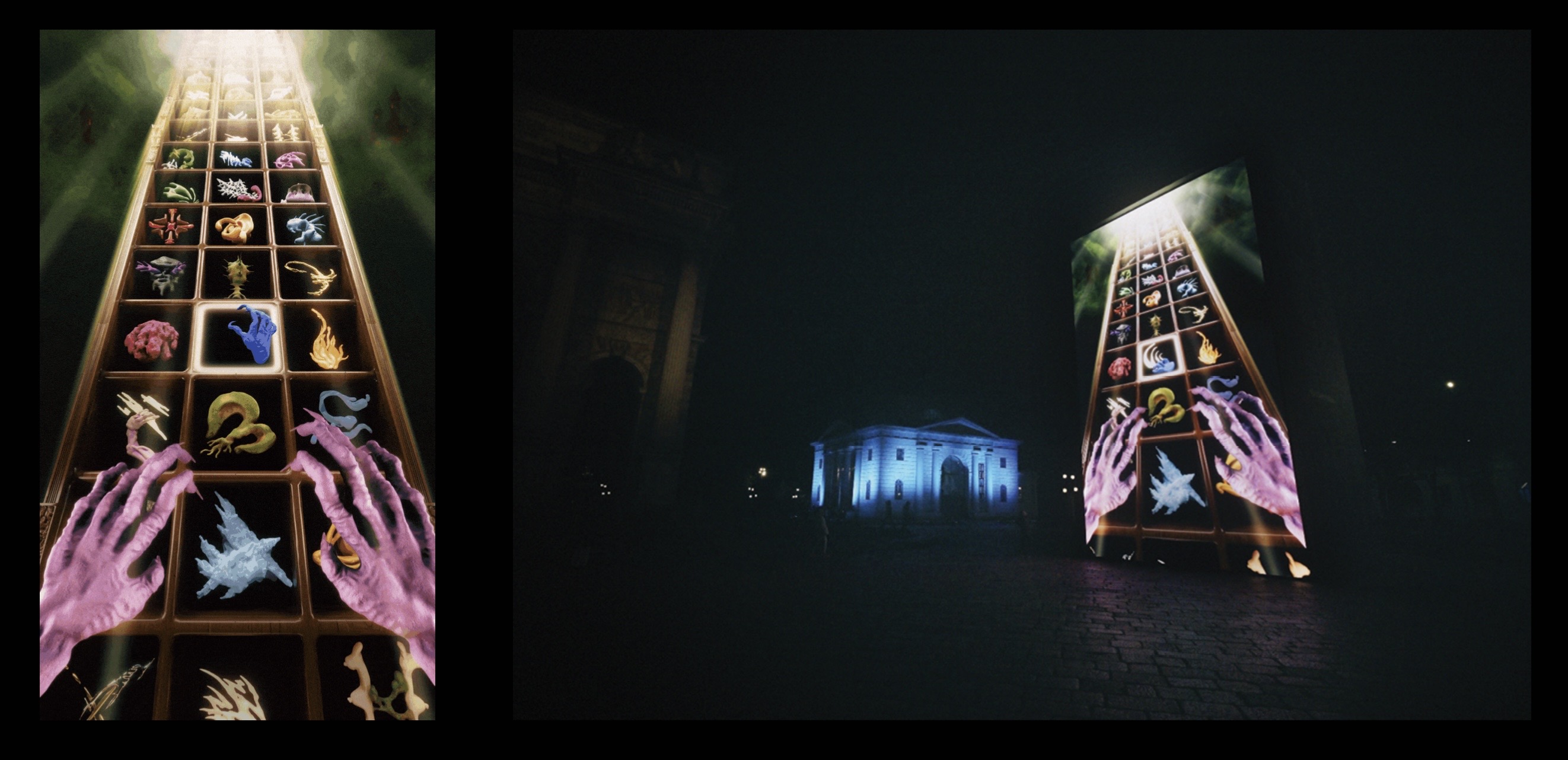
While I have conflicted feelings about AI, and remain quite critical of it—especially in relation to intellectual property and ownership—I have been cautiously using it to speed up the slower technical process of building my own art-making tools, rather than to make the art itself. It has pushed me to become much more introspective about my own artistic process: what I value about it, what I find cumbersome, what creativity means to me as a human being, and which parts of the process feel essential to that deeper, human purpose.
My favorite use recently has been vibe-coding real-time visual tools in TouchDesigner for live audiovisual performances. It’s been fun creating custom shaders that melt and dither my 3D animations, building visual feedback loops, and driving real-time particle simulations with live iPad animations.
What do you think is the relationship between art and technical innovation?
I think it is a relationship that has changed significantly over time. There have been moments when art itself drove technical innovation—think of the elaborate camera rigs invented for old Hollywood productions, or the motion-capture systems developed for films like Avatar. Today, however, I believe that most technological innovation is driven by the military and extractive tech companies. That means artists who use technology in their work are inevitably creating in response to these larger forces, whether they intend to or not.
Many artists in my field choose to ignore this, opting for a techno-optimist vision of the future in which we somehow innovate our way out of the many crises we’ve created for ourselves. I’m instead trying to harness these tools and use them in ways they were never intended to be used. It may be naive, but to me it feels like putting a seed down the barrel of a gun.
What are the feelings you want the viewers to take away from your work?
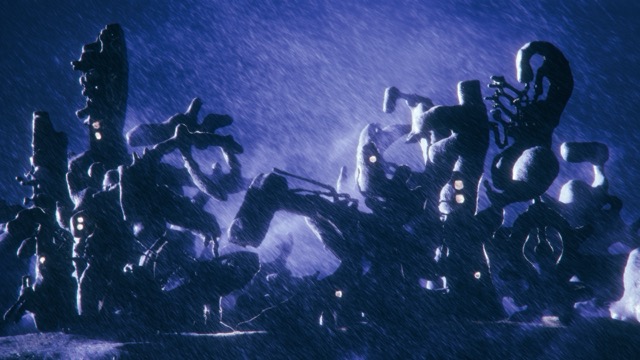
I want it to give you the feeling of stepping into an abandoned building that has become overgrown and reclaimed by the natural world. There is a dark surrealism to spaces like this—a familiarity, a sense of overwhelming awe, yet also a sad strangeness. My work often embraces this darkness, but it also has a side that is quite playful and absurd. I believe these feelings belong together; you can observe them in the natural world: its ferocity, its pensive stillness, its indifference, its playfulness. I believe all things have a duality, a beauty and an ugliness, and this is the feeling I’m after.
P.S. I’d like to acknowledge my frequent collaborator Hugo Shiboski, without whom, many of these projects might not exist. We’ve also recently been collaborating with our friend Angus Oakes on a number of these audio visual performances.
.png)
