
Tommaso Cherubini (Macerata, 1995) is a new media artist working at the intersection of generative artificial intelligence, data processing, immersive environments, and multimedia installation. His practice explores the translation of historical archives and datasets into layered visual experiences, shaping fluid narratives that engage with memory, time, and landscape. Through the use of New Media Art, he investigates contemporary challenges by reinterpreting data and archival material, transforming them into dynamic visual forms that extend beyond their original context. His work is driven by the intention to activate new ways of perceiving complex systems, bringing audiences closer to subjects that are often considered distant or inaccessible. At the core of his research is the belief that art can function as a catalyst for awareness and behavioral change. By harnessing the expressive potential of generative processes, he develops projects that foster a deeper understanding of social and environmental issues, encouraging a more conscious and interconnected relationship with the world.
How would you describe your artistic practice?
My artistic practice revolves around the transformation of scientific data, historical archives, and environmental information into immersive audiovisual experiences. I work at the intersection of art, science, and technology, using new media as a language to make complex systems perceptible.What interests me is creating a point of contact between data and human perception, translating abstract, often inaccessible information into something that can be felt. Through this process, I try to reduce the distance between people and the ecosystems they are part of, opening up a more intuitive and emotional way of engaging with scientific knowledge.
How are you using technology to engage with nature?
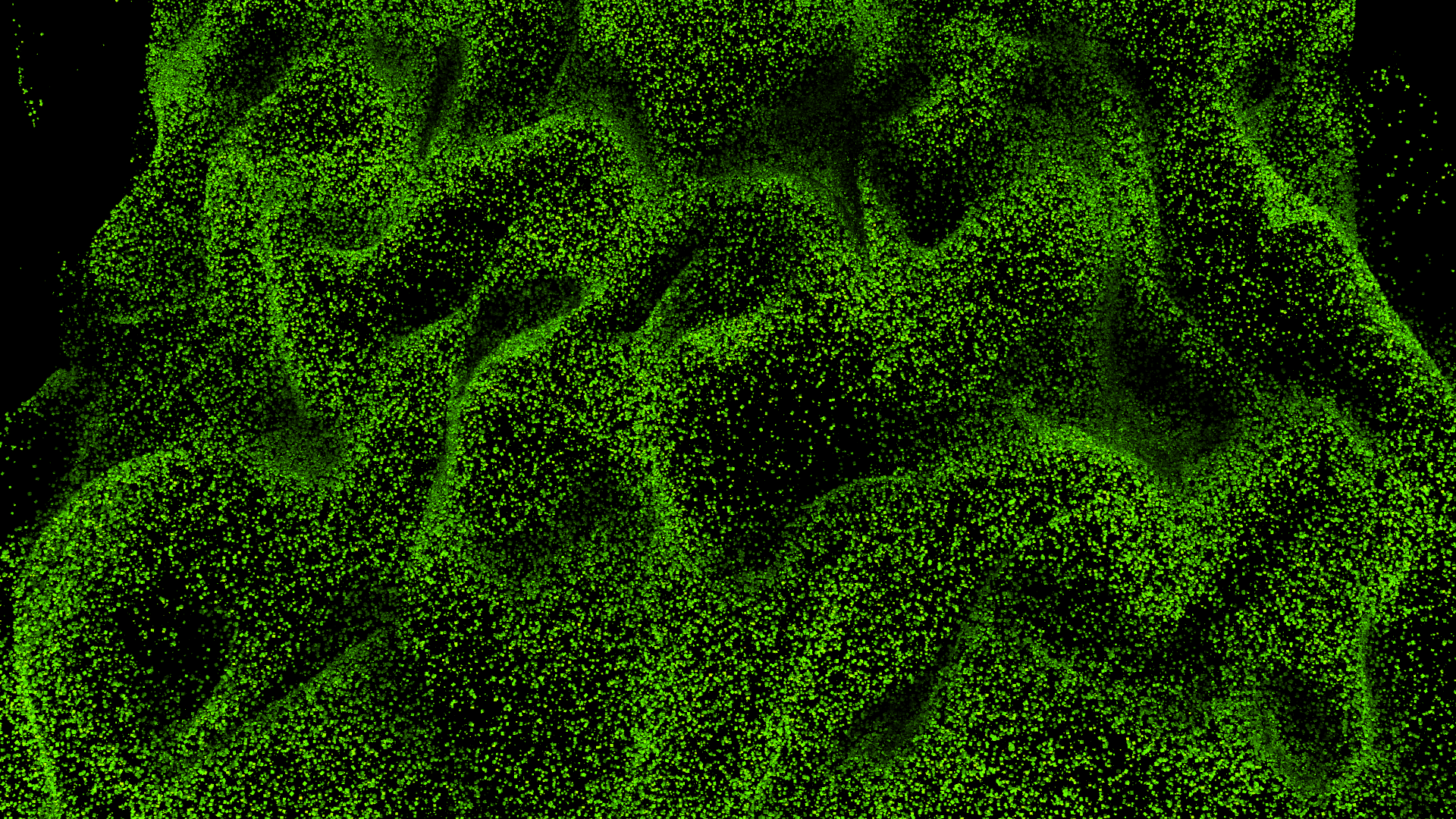
Technology is both my research tool and my expressive medium. I collect, analyze, and cross-reference environmental data, such as hydrological measurements, ecosystem dynamics, or historical records. and then transform them into visual and spatial narratives.Using tools like TouchDesigner, AI models, and custom data pipelines, I build dynamic systems where data becomes behavior: particles, flows, and evolving structures. These elements are driven directly by the data itself.The goal is to allow nature to emerge through its own signals, creating experiences where viewers can perceive environmental processes as something alive, in constant transformation.

What interests you about working with emerging technologies?
What fascinates me is the possibility of expanding a finite system - like a dataset - into an infinite field of visual and experiential outcomes. Emerging technologies allow me to treat data as a living material, something that can be shaped, animated, and continuously reinterpreted.They remove many of the traditional constraints of artistic production. If I can imagine a behavior, a transformation, or a system, I can often build it. This freedom opens up a space where experimentation becomes central, and where complexity can be explored without simplification.
How do you view the relationship between art and innovation?
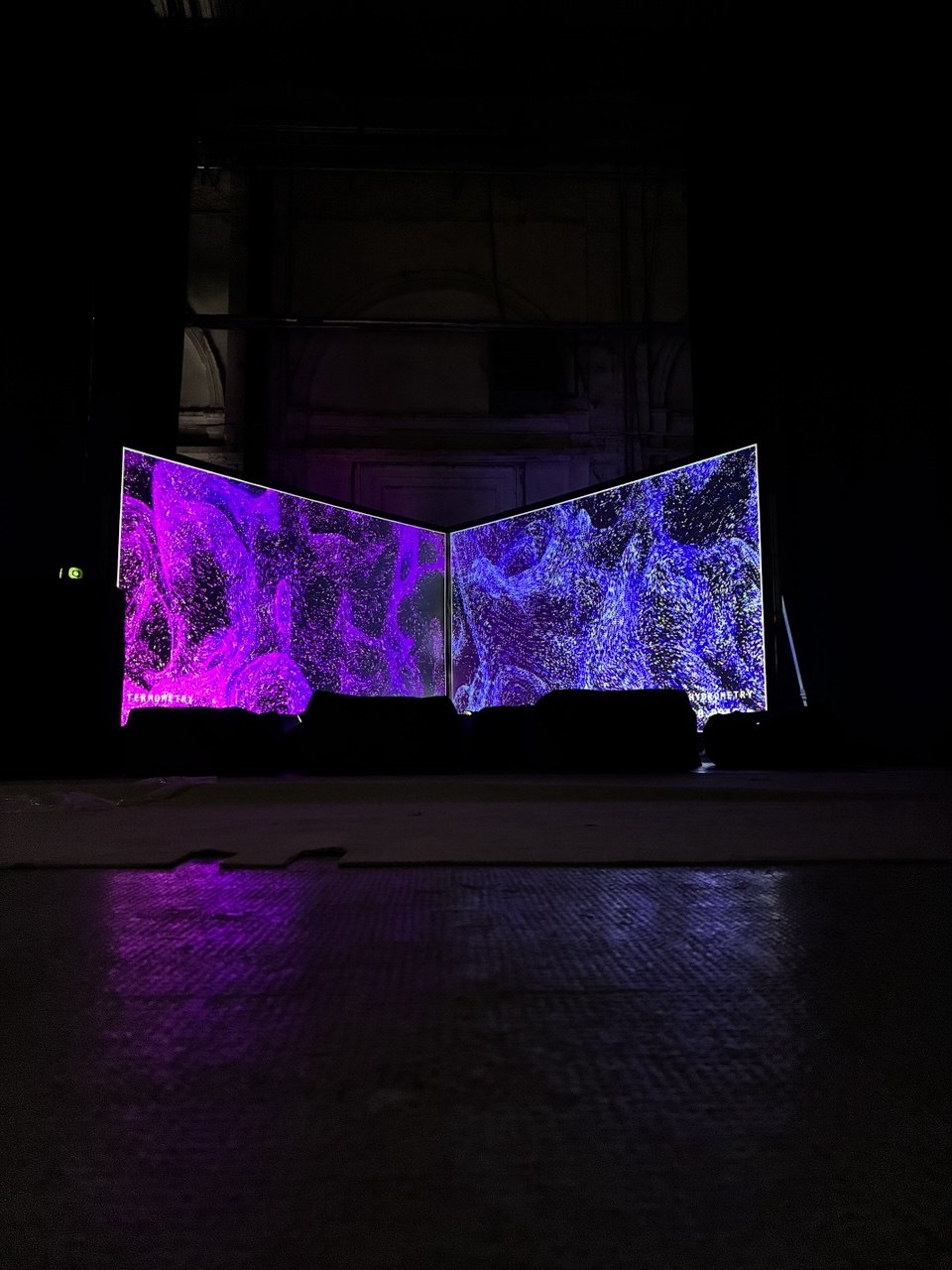
We are living in a moment where technology makes production extremely accessible, and images are generated at an unprecedented scale. In this context, innovation in art is about how and why these innovative tools are used.
I see art as a way to reintroduce intention, depth, and criticality into this landscape. Technology, especially AI, is incredibly powerful, but without a strong conceptual foundation it risks producing visual noise.The relationship between art and innovation lies in the ability to push beyond immediacy and surface, developing works that carry meaning and reflect a precise vision.
What do you want the viewer to take away from your work?
I want the viewer to allow themselves to question their assumptions, challenge their own perspectives, and reflect on their role within the world. My work often deals with environmental and social systems, and I try to move away from an anthropocentric viewpoint.The aim is to create a sense of connection - an awareness of being part of a larger, complex network where human activity is only one component.In projects like Invisible Ecologies, where hydrological data of the Arno River becomes a narrative structure , the intention is to let the ecosystem “speak” through data, generating both an analytical and emotional response.If the work succeeds, the audience leaves with a deeper sensitivity toward these invisible processes, and a more conscious relationship with the environment they inhabit.
