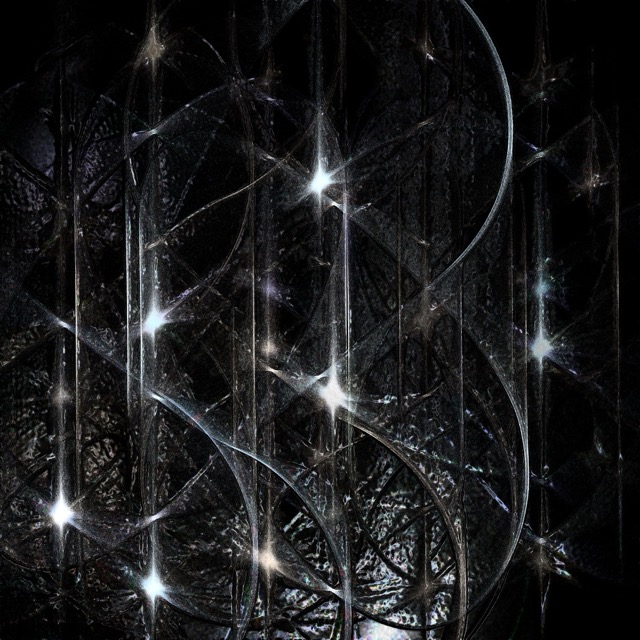
Leo Pereiro is a visual artist who uses digital technology to create beautiful cinematic spaces. For Leo, colours and shapes work together to build an atmosphere of introspection within contemplative environments. Working with technology allows Leo to make a connection between the human being and the boundaries of the machine. We spoke to Leo about his artistic practice and his reflections on working with technology.
How would you describe your artistic practice?
My artistic practice falls between several different areas. Back in the day, I was always trying to make creative things, mostly with image and sound. My main background is in cinema, where Iinitially wanted to work with script-driven structures. As I went deeper, I found myself drawn to a more abstract language, sensory-driven, influenced by experimental cinema authors.
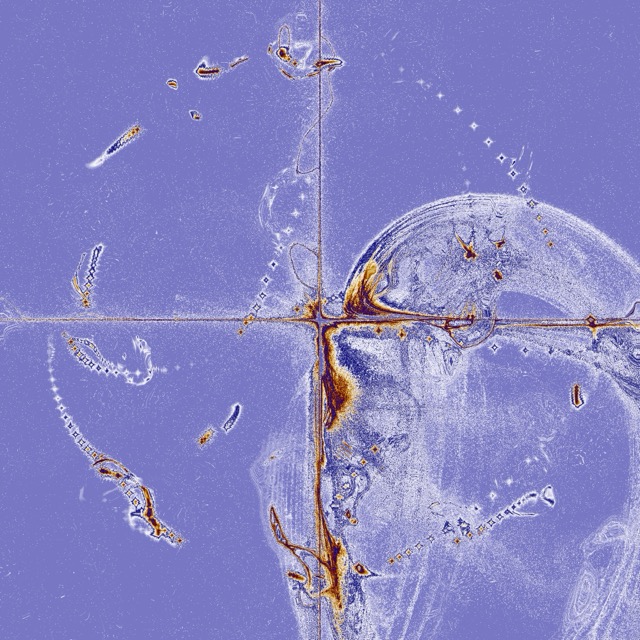
Part of that language is about experimenting with the properties of shapes and colours. I like to play with symmetry and composition rules, and then create some glitch and noise effects through them. It’s about finding a sweet spot between harmony and distortion.
Some of my references are really important in my work because they come from different disciplines but converge together into one. For example, musical pieces could give me some inspiration to create a specific visual, so it’s all a multidisciplinary thing.
Working with real-time computer technology opened up a new horizon for me, where I can still chase that correlation while experimenting with the medium. For me, it's something like creating a cinematic composition inside a dream laboratory, where ideas and tools aren’t always tangible things, but are somehow waiting there to be discovered.
How are you working with digital technology in your work, and what interests you about working in this medium?
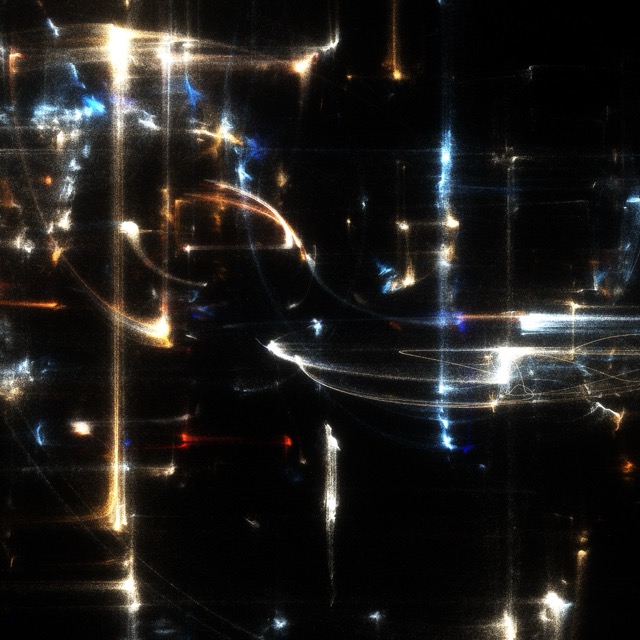
Technology is mostly challenging for me. I find myself in an uncomfortable world sometimes, I’ve always struggled with mathematical structures. Despite this, there’s something really valuable in that process, which guides me to understand how powerful technology can be. It’s actually a journey about expanding your own knowledge and the way you create.
I’m mostly interested in understanding how to make more organic visual systems, improving my logical thinking, while I keep searching for new methods of artistic composition. It’s that balance between technique and artistry, pushing the limits between human creativity and the machine’s logic, that motivates me to get deeper into generative creation.
What do you think is the relationship between art and technical innovation?
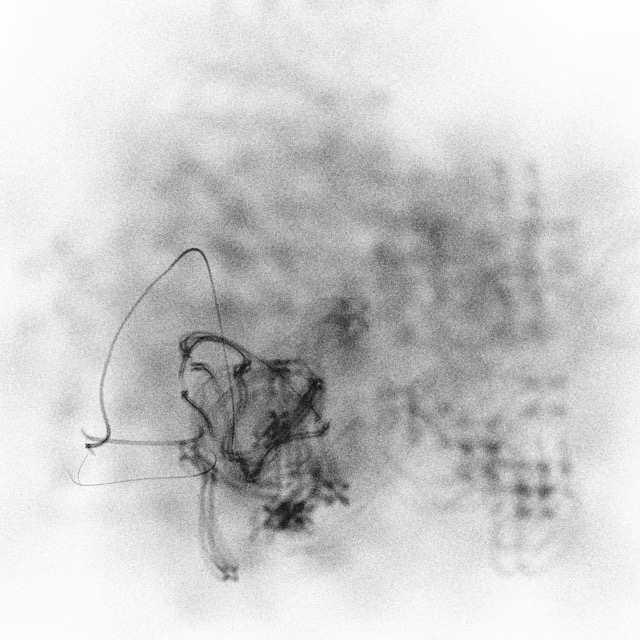
I feel that it’s the natural course of creation. Both areas are about trying and failing, experimenting with the process. Although each one can expand in its own way, we’re probably just seeing the beginning of that relationship.
As I keep progressing, I see more clearly that we have the opportunity to create what would have been the dream of some past authors, and all that we really need is a computer. There’s some nostalgia for analog, but its cost is much higher, as it becomes more expensive and less democratic. It’s true that we have lost some of that magic of the moment, but technology allows us to fail dozens of times, and there’s not really a punishment; it’s more about the process of discovering.
As an artist, what excites you about AI and what concerns you?
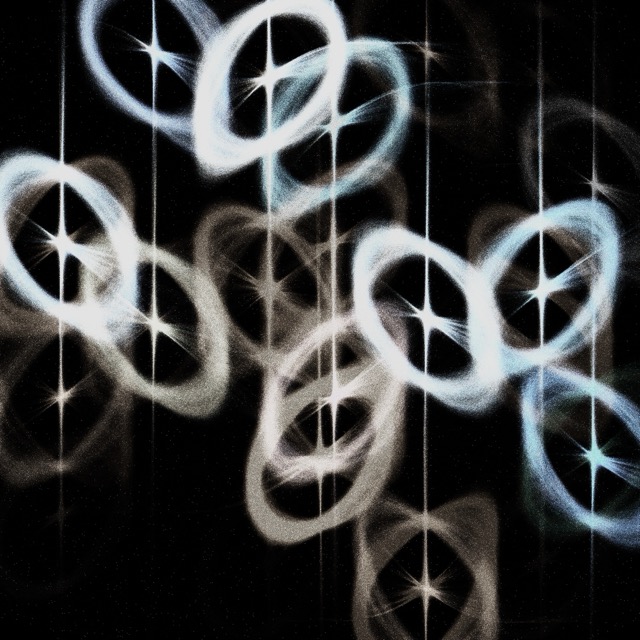
In my case, I don’t use AI in my creative process, and it probably won’t fit into my workflow if it still goes this way. I think we’re getting closer to the point where AI could really coexist with other forms of art without creating a dilemma, which will benefit most creators. In the end, art is about living the
process, each person uses the tools that feel closest to their perspectives.
A big part of my work is about trusting my intuition. Sometimes it’s difficult to know what you are doing at a certain moment. After hours and hours, some things start to click, and eventually, when you’re facing the same thing again, you know the better approach. It’s hard to replicate a process like that with AI, the outcomes would be very different. I can’t really imagine it that way.
It can be a bit frustrating figuring out what pieces are using AI in fraudulent ways. Maybe in the future, those forms of AI art will be the kitsch of generative art. But I feel that AI will help a lot of creators expand their possibilities instead of replicating the human creativity.
What are the feelings you want the viewers to take away from your work?
Every feeling is valid, so for me it’s an expansive process with the viewer. It’s really curious when a viewer finds something in the pieces that I would never have thought about. I think that’s where the magic happens, when the piece takes on its own life.
Besides that, it can be a complicated relationship sometimes. Working so hard on a piece can occasionally feel like it’s drifting away from its original nature. Even so, it’s something that is almost impossible to control. It takes time to know when to let a piece go.
In the case of digital technology, we’re adding a new constant to that tension between the art and the artist. Your logical process and your limitations will definitely play a part in that work, defining certain distinctive traits, which I think ends up being something beautiful. It’s an ongoing conversation; it takes time to resolve some doubts, but in the end it’s all about continuously questioning and evolving with your work.