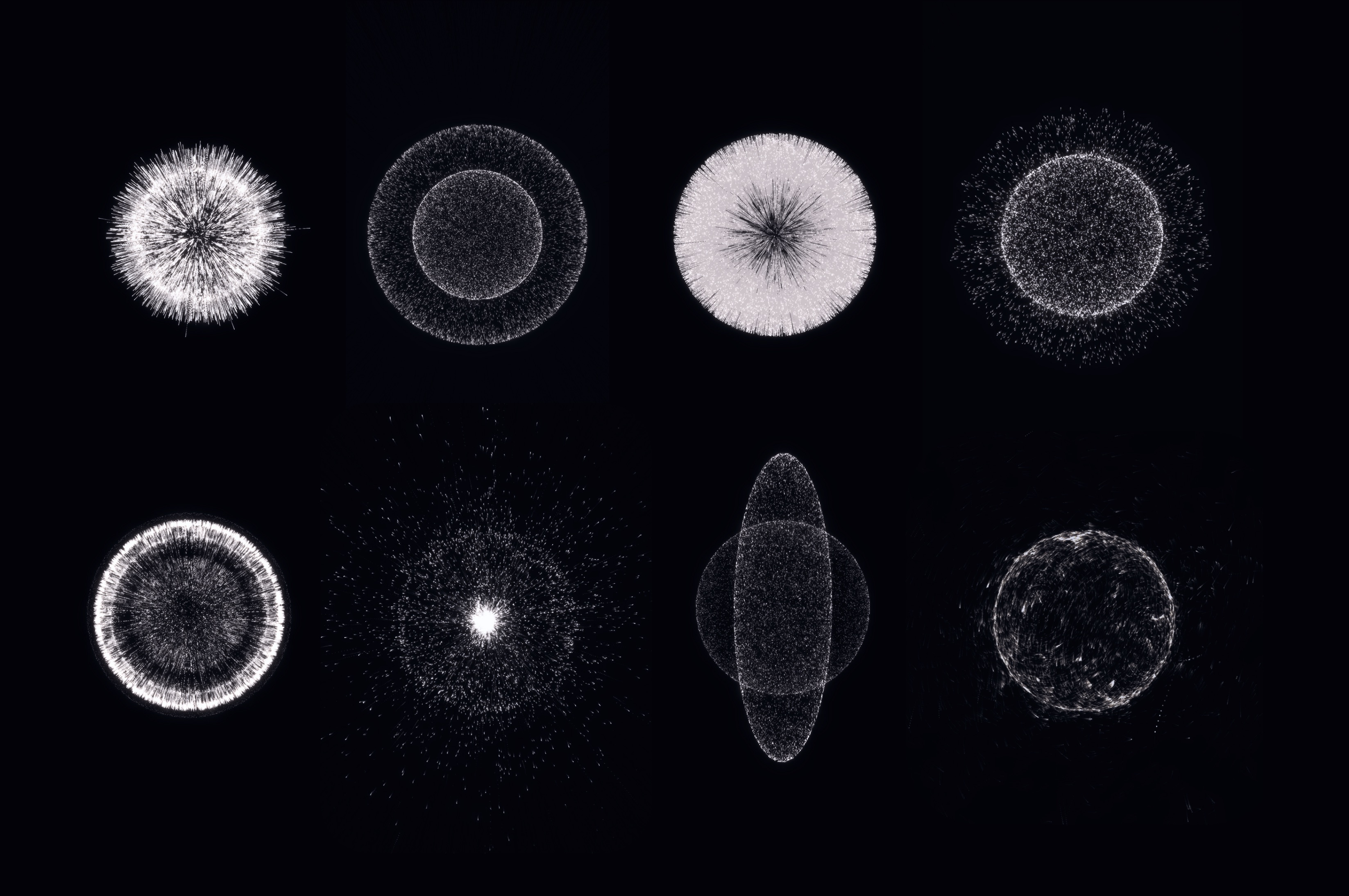
Kirsten Swensen is an Amsterdam based Digital Media Artist whose process often begins with a question or feeling, transformed into dynamic video art, immersive installations, and detailed generative compositions leveraging data and code. With a background as a Product Designer and Creative Technologist, she now channels that expertise into her artistic research. Working within the field of generative art, Swensen combines digital formats and physical media to explore new visual possibilities. She employs generative systems, artificial neural networks, and various mixed techniques. Her work has been performed and exhibited in institutions worldwide including Nxt Museum, Rosewood Amsterdam, Van Abbemuseum, MMMAD Festival, Sedition Art, Blinc Festival, Adelaide Festival, Glow, Dutch Design Week, STRP Biennale, DEMO Festival and more. We spoke to Kirsten about her practice and philosophy on working with technology.
1. How would you describe your artistic practice?
My process often begins with a question or feeling, transformed into dynamic video art, immersive installations, and detailed generative compositions leveraging data and code. Shaped by a childhood surrounded by games and computers, I work with code, data, and field recordings, using them as both input and inspiration for my generative installations. When working with data drawn from nature, I’m fascinated by the challenge of translating invisible information into something tangible—whether that becomes a flowing surface, a rhythm shaped by extracted sky data, or recorded sounds and emotions transformed into digital paintings and evolving colour palettes.
My approach is shaped by the continuous flow of motion, reimagined through digital processes often resulting in dreamlike ethereal realms. Using generative algorithms I create shifting digital systems and surfaces that mirror the complexities of the natural world.
2. What interests you about working with data and generative technologies?
I’m deeply interested in working with data and generative technologies because I see them as tools for uncovering patterns and hidden forms of communication in the world around us. What inspires me about the generative process is its element of surprise. I might start with a specific intention or formula, but small changes in parameters can lead to completely unexpected and beautiful results. As a designer, I rely on my visual intuition to recognise when something has strong compositional qualities. From there, I refine and develop it further.
For me, working with generative systems feels like a collaborative dance between human and machine. Sometimes I deliberately step back to let the raw data speak for itself, while other times I take on the role of an orchestrator, guiding the process to shape its outcome. This balance between control and randomness is what makes the work feel so engaging and alive.
3. What is your philosophy on art and technology ?
I believe that science, art, math, philosophy, and nature are deeply intertwined, each serving as a different language for exploring the same fundamental mystery: the inner workings of our consciousness and the universe. Every discipline views the world through its own lens, yet all share a common search for pattern, meaning, and connection.
Technology, to me, is a continuation of this exploration. It gives us new ways to visualize, simulate, and interact with ideas that were once intangible, while art brings emotion and reflection into that same process. When these two fields meet, they have the power not only to represent reality but to reshape how we perceive it. Creativity and discovery are inseparable parts of being human.
4. How would you describe the relationship between art and innovation?
Art has always reflected the spirit of its time and is inseparable from the way our world evolves. Today, we are living in an era of unprecedented digital acceleration, with AI advancing at a speed unlike anything seen in human history. In this context, it feels more important than ever for artists to respond, to question, reinterpret, and offer perspectives that go beyond the narratives shaped by mainstream culture.
Innovation may drive the tools we use and the speed at which we create, but art defines the meaning behind those transformations. It acts both as a mirror and a counterpoint: embracing new technologies while also exposing their impact or limitations. As progress moves in one direction, there’s often a creative force that emerges to balance or challenge it. That tension between art and innovation is what keeps culture alive and evolving.
5. What do you want the viewer to take away from your work?
Drawing inspiration from my experiences with Vipassana meditation, I aim to translate the contemplative and introspective qualities of that practice into my digital work, creating spaces that invite viewers to pause, reflect, and reconnect with themselves.
I want my work to remind people that technology doesn’t have to distance us from our inner world; it can also serve as a bridge back to it. By merging digital processes with meditative awareness, I aim to create experiences that reconnect us with nature and remind us that we are part of a larger system. Ultimately, I hope viewers leave with a renewed sense of stillness and curiosity about their relationship with both the natural and technological worlds.