
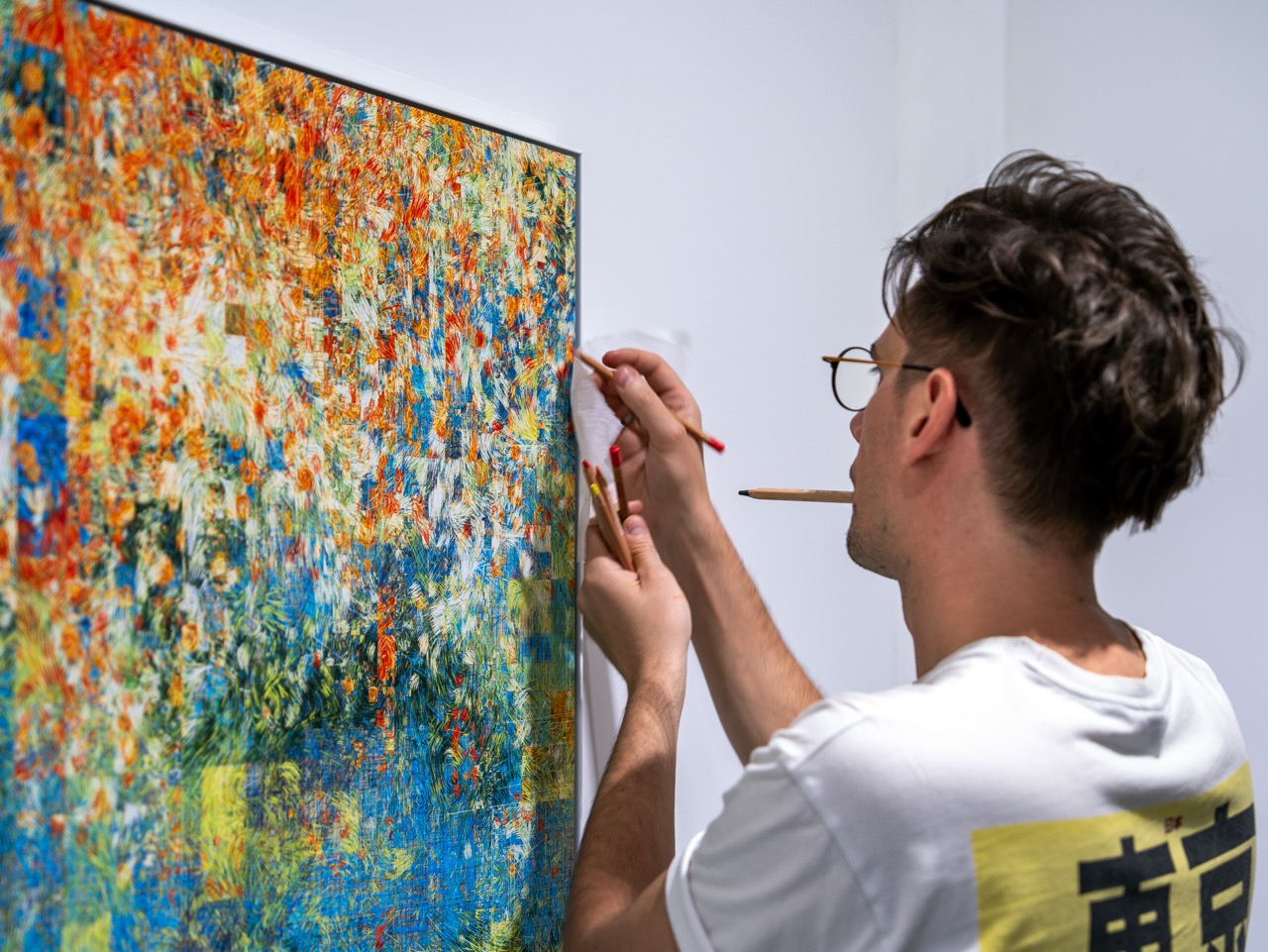
Florian Zumbrunn is an artist who paints with code, exploring memory and nostalgia through works that shift between the digital and the physical. Echoing the painting of Monet, Renoir, or Sisley, Florian Zumbrunn's practice is rooted in nature landscape, its nuances, colours, and light, its perpetual changes through day and season to capture an impression, to explore its variations through iteration. Trees form the raw material of his algorithms. Inscribed in each generated image, they structure its apparent abstraction. Like a memory slowly fading, they suggest presence while revealing absence a diluted trace, a reflection linking the artificial image back to the natural, guiding the gaze toward memory. Zumbrunn's work then returns to matter, incarnating and evolving. Often printed onto paper, the image is further heightened pastel or oil applied in response, textures added, gestures reintroduced, opening a dialogue with the image itself. We spoke with Florian about his process, self-reflection and the importance of physicality in his work.
Your process for creating art is so unique, please could you talk us through it?
My process is unique, I guess, because of the tool I use and the fact that I start in front of my computer but end in my atelier in front of a physical, tangible piece.
Code is my main brush. It opens up endless ways of working, and mine is very iterative and introspective. When I start a new collection, a new algorithm, I have a clear vision of where I want to go, both aesthetically and conceptually. But I stay very open to the surprises that come with this kind of tool, and to the variations I know I will want to explore.
The beautiful thing with code is that you can create an algorithm, give it a lot of parameters, and play with its components, like randomness. On top of that, I build my own tools to use and manipulate my algorithm. They let me explore it and add more control. It becomes more deterministic, and it narrows down the possibilities that come out of my generator.
What fascinates me is that there is randomness, but there is also me, in front of the computer every day: generating new artworks, adding features, discovering new things, and asking myself what it all means to me. Do I like it? Am I happy with the surprise that just appeared on my screen? Will it make it into the final piece?
At the end of the day, you see thousands of your own creations in front of your eyes. You get influenced by your own work, but you also get surprised by it. The algorithm becomes like a new member of the team. The more it evolves, the stronger and richer in possibilities it becomes. Because it generates something new every time, it turns into a Pandora's box of ideas.
But I only use algorithms up to a certain point. My tools let me control them: the palettes, even with a bit of randomness, are created by me, and so are a lot of the compositions. I play with the surprises that emerge, but I also guide them, exactly in the direction I find most interesting and that best expresses my original idea.
Then I export the image and print it, usually on watercolor paper. It has a strong texture that adds to the textures I added in my code. I leave the screen and go to my atelier, where I work with traditional tools: crayons, pastels, and oil pastels...
I rediscover the artwork I have seen on screen so many times.
The scale is different, the texture is different.
When I'm ready, I start working on it. It becomes a new piece, the final piece, which I send to my framer.
Only then is the artwork finished and ready to be sold.
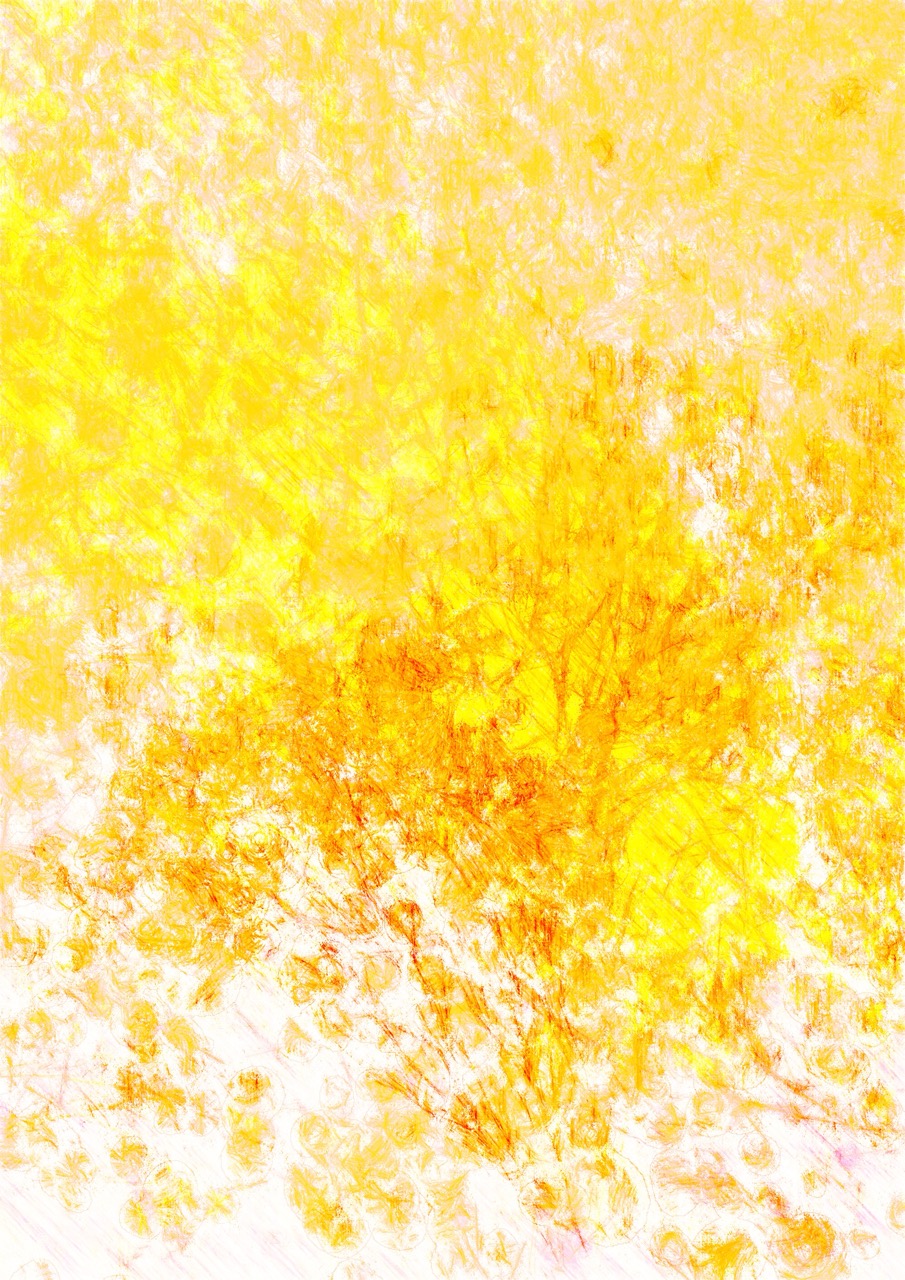
What is the importance of creating a physical form for your artwork?
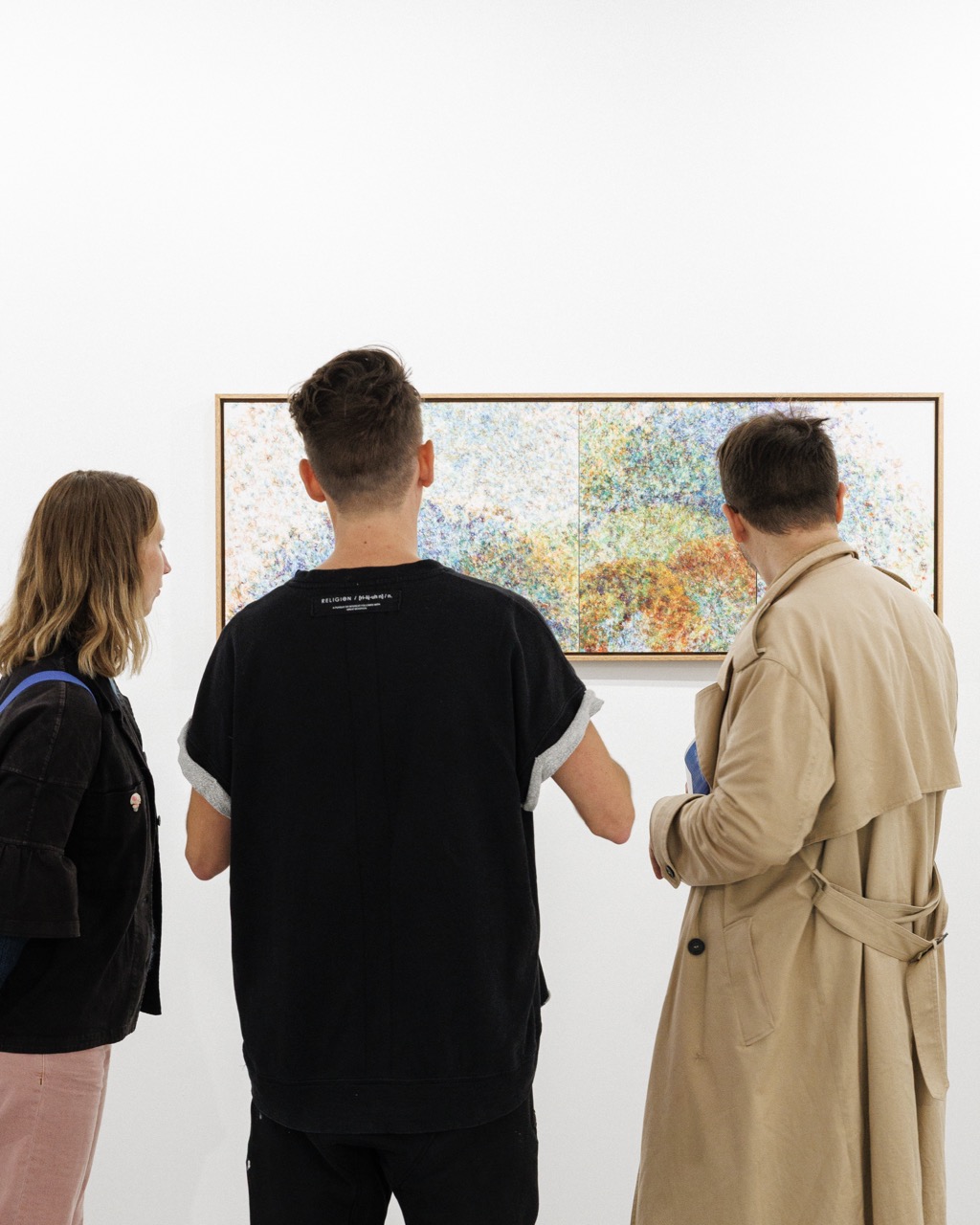
It's essential. I quickly realized that even though I create on a computer, I (mostly) don't want people to experience my art behind a screen, but in front of a physical artwork.
When the artwork leaves my screen, the scale changes completely, and the texture of the paper brings something new. Rediscovering a piece at a different scale changes everything. It also changes time: in front of a screen, people look and move on. In front of a physical artwork, they stay.
That's how I want people to connect with my art. With a few exceptions, I feel a piece is not finished until it becomes physical. That's when it feels complete to me.
There is another side to it. On a computer, everything is fast, even for me as a creator, and there is no risk. Anything you add can be removed instantly. You can always go back in time.
Once the artwork is printed, every gesture impacts it forever. In front of the physical piece I become more vulnerable, and a new part of my brain wakes up.
Sometimes I finish an artwork in a few hours. Sometimes it stays on my wall for three weeks, and I come back to it day after day. It asks a lot of me. Then comes the question: when is it finished? There are many answers, but usually it's when it has been on my wall for a while and I no longer feel the need to pick up my pencils. It's just ready as it is.
And yet, as long as it's with me, I can always come back to it and change it.

Can you tell us more about the role of memory and self-reflection in your practice?
As a human, I'm very sensitive to the little changes in the weather. When the first cold wind arrives after summer, my whole brain takes me back to my memories. I'm very nostalgic.
I usually love a holiday a week or a year after it happened, not in the moment. I only understand the value of a moment afterwards. I know it's not a unique feeling, but it's very present in me, and it has always been a struggle. Not being able to live fully in the present and appreciate it is something I'm trying to change in myself.
Memory, for me, is about being able to go back to a moment you love. That's also why I create: I want people to look at my artworks and go back to their own memories, to connect with them through their own perspective.
Self-reflection comes from creating. The more I create, the more I understand myself and what makes me vibrate. Working with a computer is amazing because of the ping-pong it creates: something unexpected is thrown at you, and you think, "Oh, I can reinject that directly." It's very playful, but it also requires a lot of rigor and discipline. It's easy to lose track, to lose yourself, and to forget what you wanted to express.
I love that part too. The more I create with algorithms, the more they force me to make decisions, and I feel it's also a way of becoming a better human being.
And the older I get, the faster life goes. I tend to forget what I did in the past. It's easy to move on, easy to forget where you come from. That's why memory matters.
Generating emotion through my artwork, for me and for others, is very important. If I can connect people to their own memories, make them think about what they have lived, make them slow down, then I'm very happy.
What interests you about working with algorithms particularly when engaging with the natural world?
Honestly, working with algorithms simply fascinates me. I love the process for itself.
I work with the natural world because of what it represents: it always changes, it's never the same. Each season comes with its own colors, temperature, wind, and intensity, and with a shift in mood. I'm not the same person in summer as in winter, and I love that: the impact seasons have on us.
Nature makes me slow down too. Since I embraced my artistic path, I look at the details around us and all the beauty nature lets us witness every day: the sunrise, the sunset, the lower light in winter. Right now, just looking outside at the whiteness of the light, I can tell autumn is coming. That makes me feel something.
When you look closely at nature, you see its generative side, and my brain goes: "Oh, I could add this to my artworks.". Or how could I recreate this emotion through a piece.Sometimes I look at the details. Sometimes I look at the big picture, at the composition it offers: leaves and branches creating beautiful color combinations. Then I don't see details anymore, I see masses of color.
Nature is an inspiration I can always inject back into my work. And because it's always changing, it connects to memory too. Sometimes it's not even visual: a colder wind, the light on the floor. It brings me back to a certain state of mind, and that's exactly what I want people to feel in front of my artworks. So nature is a natural choice, a natural tool for me.
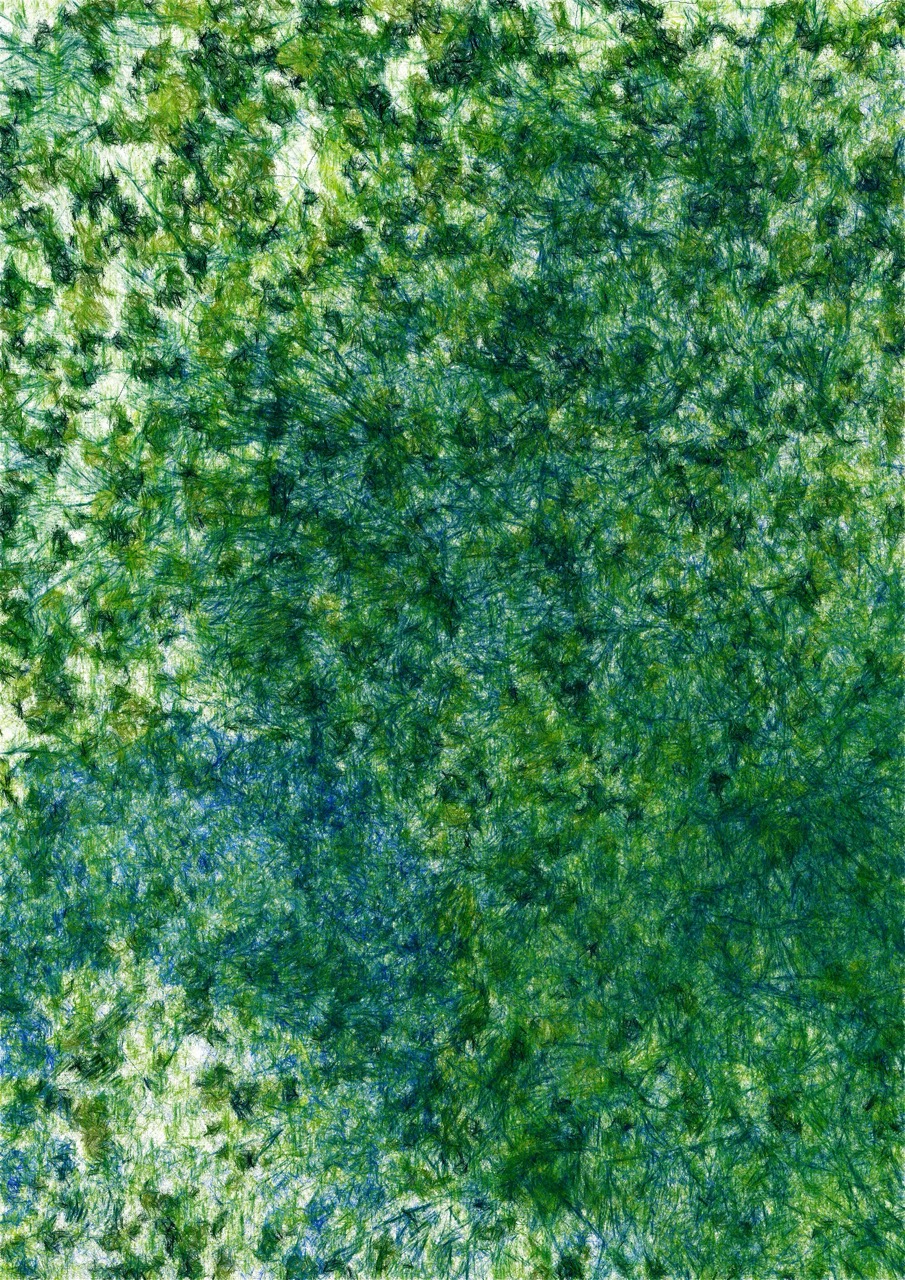
What do you want the viewer to feel when looking at your art?
I think my other answers already say it: I want people to slow down. I want them to take the time to think and to connect with themselves when they look at my artworks.A friend once told me that my artworks bring him silence. When he stands in front of them, he feels at peace. To me, that means the work is doing its job: it makes people slow down and reconnect with themselves.
%20Large.jpeg)
