
Chih-Yu Chen is a Taiwan-based generative and new media artist. She utilizes computational algorithms and chance variables to recreate life experiences, exploring new forms of artistic expression through cross-media experimentation. Her works span generative art, interactive design, and machine learning. At this stage, she explores the flow between simulating reality and poetic expression, investigating the intersection of digital technology and visual representation. Beyond her practice, she actively promotes generative art exchange and education both locally and internationally, with exhibitions across Taiwan, Japan, and South Korea.
How would you describe your artistic practice?
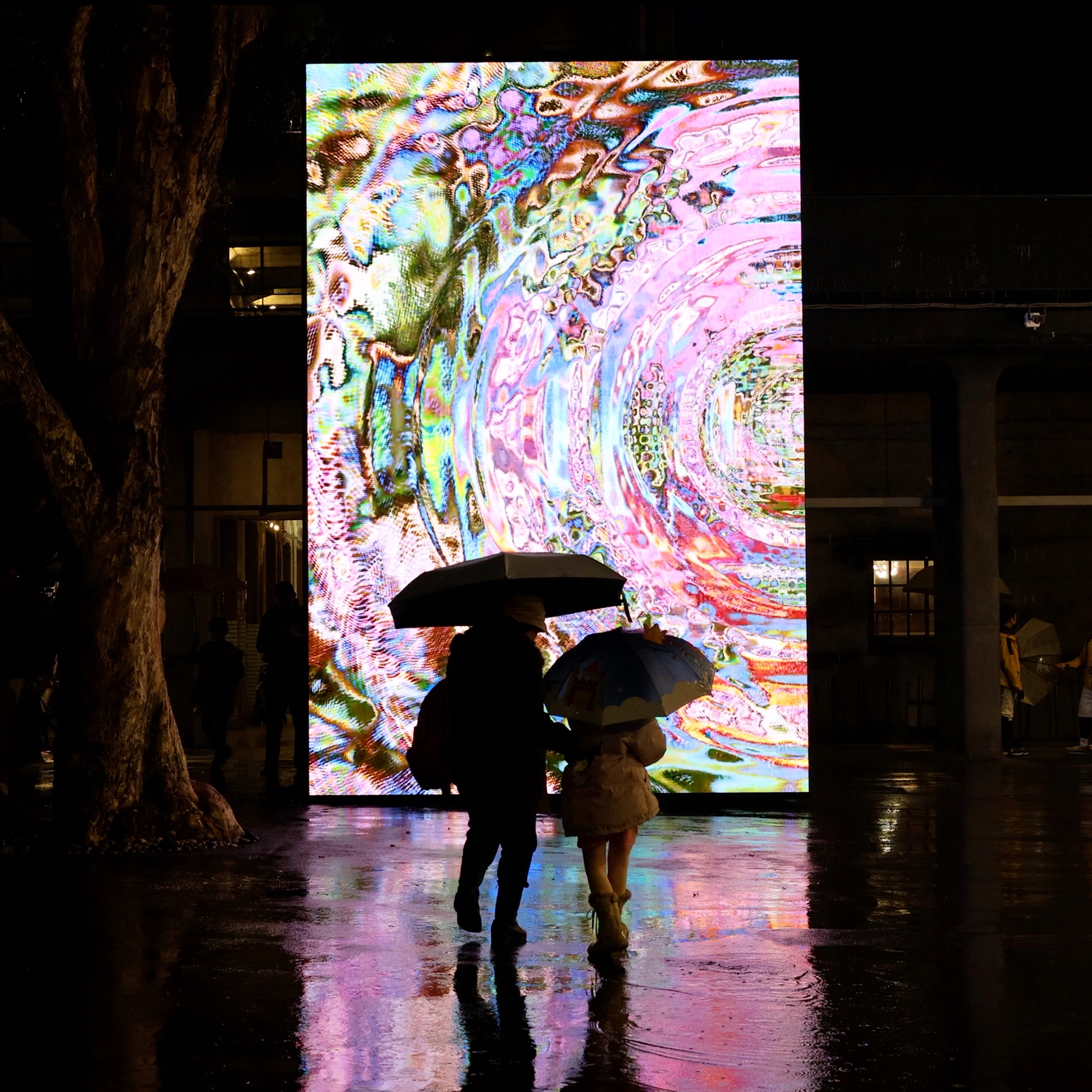
Within the constraints of fixed mathematical formulas, I explore the boundary between the real and the fictional through the recombination and blending of algorithms. Sometimes this takes the form of an abstract experience shaped by natural phenomena; sometimes it emerges from simple rules gradually unfolding; and sometimes it reconstructs imagery drawn from a database of lived experiences. I occasionally receive feedback from viewers telling me that my work evokes certain memories or feelings for them, perhaps because I always begin from personal life experiences as a starting point. In terms of process, since color is the most immediate way to establish the tone of a work on the canvas, I usually begin by choosing a color palette, then freely remix various mathematical calculations to give the work a dynamic and ever-changing appearance. Lately I've been completely absorbed in shader-based creation, though in the future I hope to experiment with mixing in physical materials, so that my work can take on forms that reach beyond the screen.
What interests you about working with generative technologies?
I see generative technology as a deeply philosophical form of artistic expression.I often find myself wondering whether the well-known algorithms we use in creative practice today were invented or discovered. Take Reaction-Diffusion for example, is it a mathematical formula that models natural phenomena, or something inductively derived from observing countless occurrences in nature? It echoes the question that resurfaces time and again: are we living inside a simulated reality?
Perhaps I'm going too far down that rabbit hole, but what remains constant is my belief that in the process of creation, it is the imperfections and errors within all those computations, encountered while searching for answers to complex questions, that keep me going. That is what makes generative art so captivating and worth pursuing.
How would you describe the relationship between art and innovation?
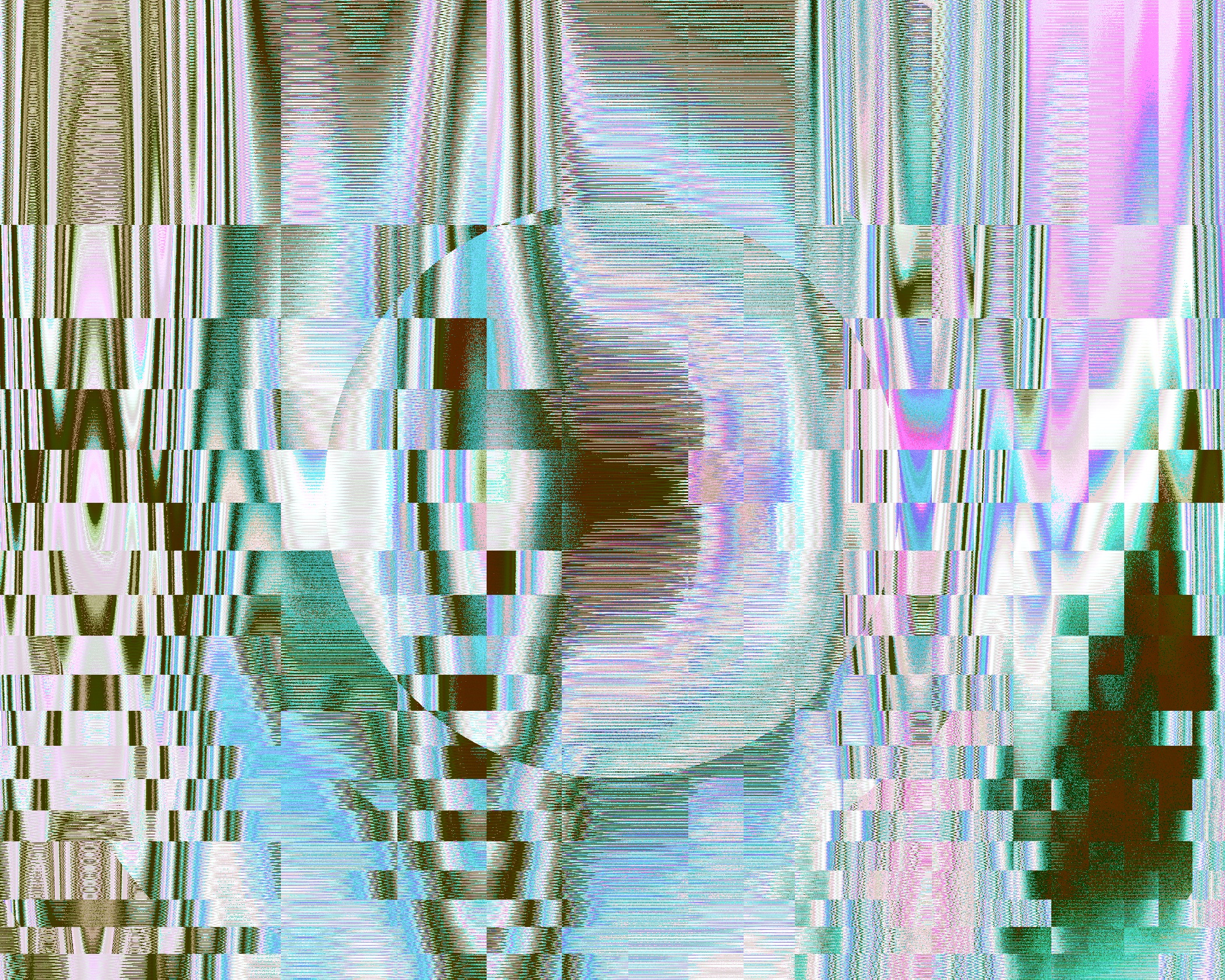
I think the word "innovation" and art are essentially the same thing, art also introduces new things, new ideas, new approaches, and new techniques into the world. If I were to elaborate on "innovation" specifically, perhaps art is the artist's invitation for the viewer to immerse themselves together in a worldview the artist has created.
.jpeg)
What do you want the viewer to take away from your work?
Much of my recent practice consists of simpler visual exercises, where I lean toward hoping that viewers can find some resonance in the imagery generated by the algorithm itself.For larger-scale projects, they tend to draw out more nuanced perspectives on the self and invite reflection on the application of technology.For works like these, I very much hope that viewers will be interested in understanding the context and narrative behind them.
What is the project you are most proud of?
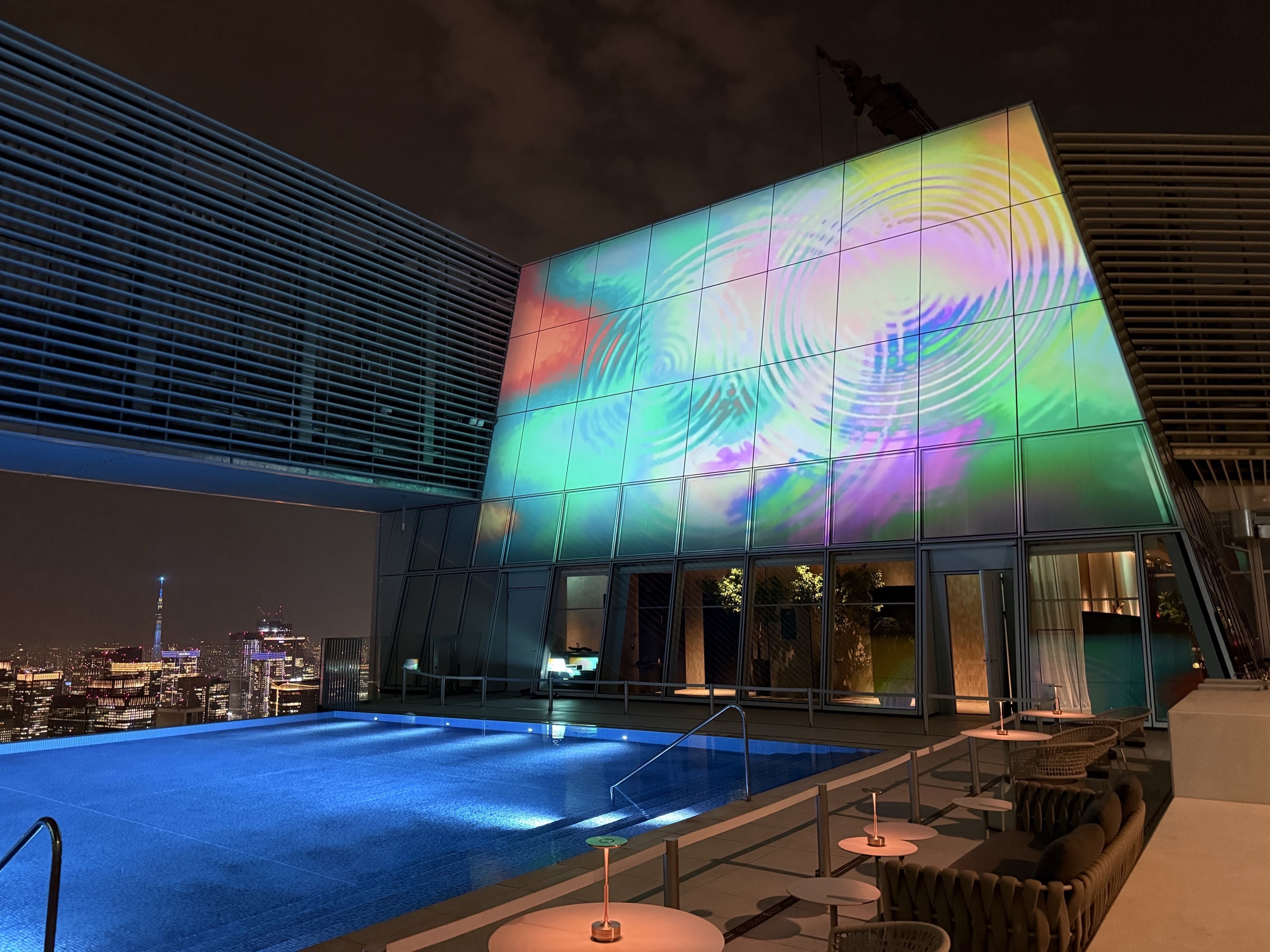
In terms of a specific work, it would probably be dialog() 2025, a collaboration I did last summer with Japanese artist Ayumu Nagamatsu. We co-edited a shader piece in the form of an exchanged diary, each of us responding to the other's intentions, every exchange felt like a mix of unwrapping a gift and a brainstorming session all at once. Ayumu's dedication to shape and geometry fascinated me, and I kept trying to respond to his work in ways that pushed me into corners of my own practice I hadn't explored before. There were of course moments of friction, our styles sometimes clashed, but it had been a long time since I'd simply had that much fun being completely absorbed in code. Throughout the process, we also kept imagining how to present this kind of creative exchange to audiences. In the end, alongside the day-by-day progression of the work itself, we chose to make our natural language conversations fully transparent as part of the exhibition and that openness ended up resonating deeply with viewers.
Though unrelated to a specific artwork is a plan I have to travel to the Gray Area in San Francisco to take part in their Creative Code Intensive program.My hope is to bring back the support systems and frameworks they have built over 20 years for creative coders, and to use that to support students in Taiwan who are interested in Creative Coding, with a particular focus on supporting women. This is the project I am most proud of right now.
Reference1:https://log.fakewhale.xyz/the-silver-move-neort-and-volumedao-play-for-legacy-not-hype/
https://two.neort.io/ja/exhibitions/silver_trail
Reference2: https://grayarea.org/course/creative-code-intensive/
