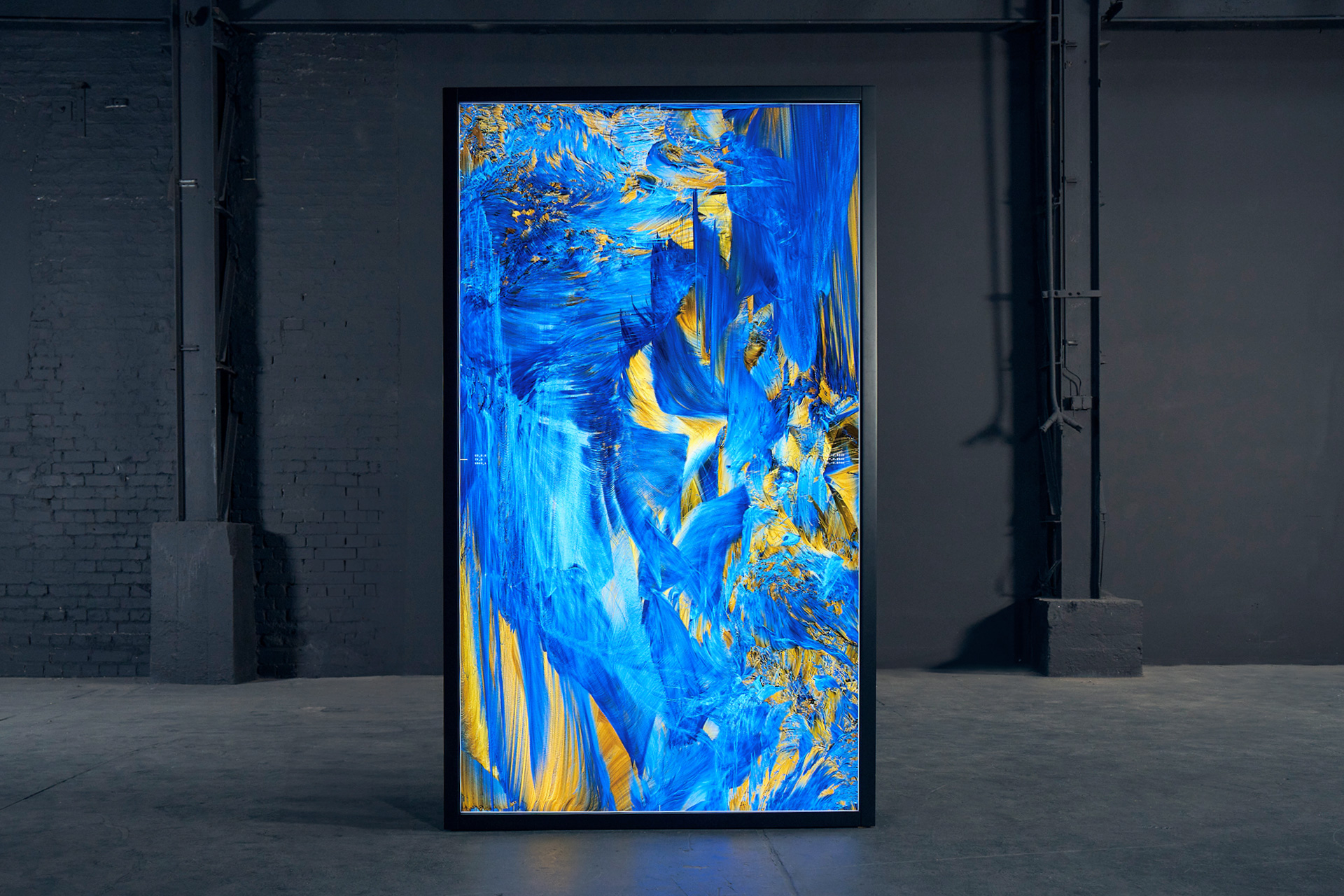
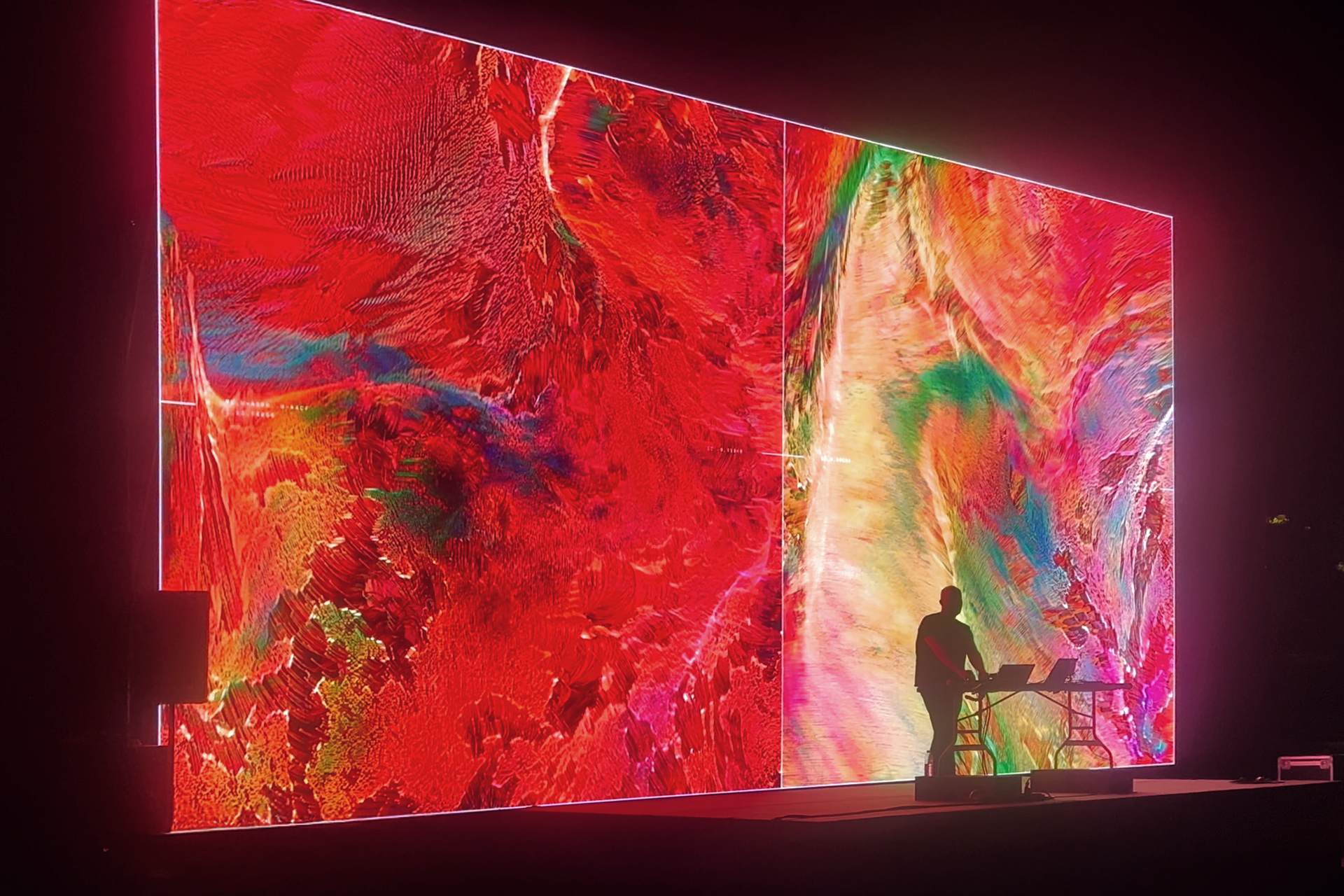
Andreas Lutz explores in his works the human machine relation with the approach, to create integrated and universal communication systems. Within these boundaries, he analyzes and reveals phenomena of perception versus reality and principles of abstract aesthetics with sculptures, installations and performances. The creation of experimental soundscapes and the relation of semiotics and sound are further aspects of his work. Among others, Lutz’s work has been exhibited at the Antarctic Pavilion during 57th Venice Biennale (Italy), the National Art Center Tokyo (Japan), at HeK Basel (Switzerland), at Times Art Museum in Beijing (China), at Karachi Biennale (Pakistan) and at Sónar+D in Barcelona (Spain) and Istanbul (Turkey). He has performed at Scopitone Festival in Nantes (France), at Medialab Matadero in Madrid (Spain), at WeSA Seoul in Jeju (South Korea), at OSA Festival in Sopot (Poland) and was awarded with the Excellence Award at the 19th Japan Media and Arts Festival (Japan) and an Honorary Mention at the Prix Ars Electronica 2025 (Austria).
How would you describe your artistic practice?
My artistic practice explores the relation between humans and machines, particularly through the lens of abstract communication, semiotics and language. I work across media — kinetic sculptures, audio-visual installations, live performances and sound — and often combine physical and computational systems. Rather than treating technology simply as a tool, I am interested in giving the technological system an active role within my work. The machine becomes an autonomous participant that can transform and communicate, creating a situation in which the human observer is no longer the only subject. So, in a way, my practice is about creating environments where humans and machines can encounter each other through unfamiliar forms of communication.
How are you working with data, and what interests you in data as a medium?
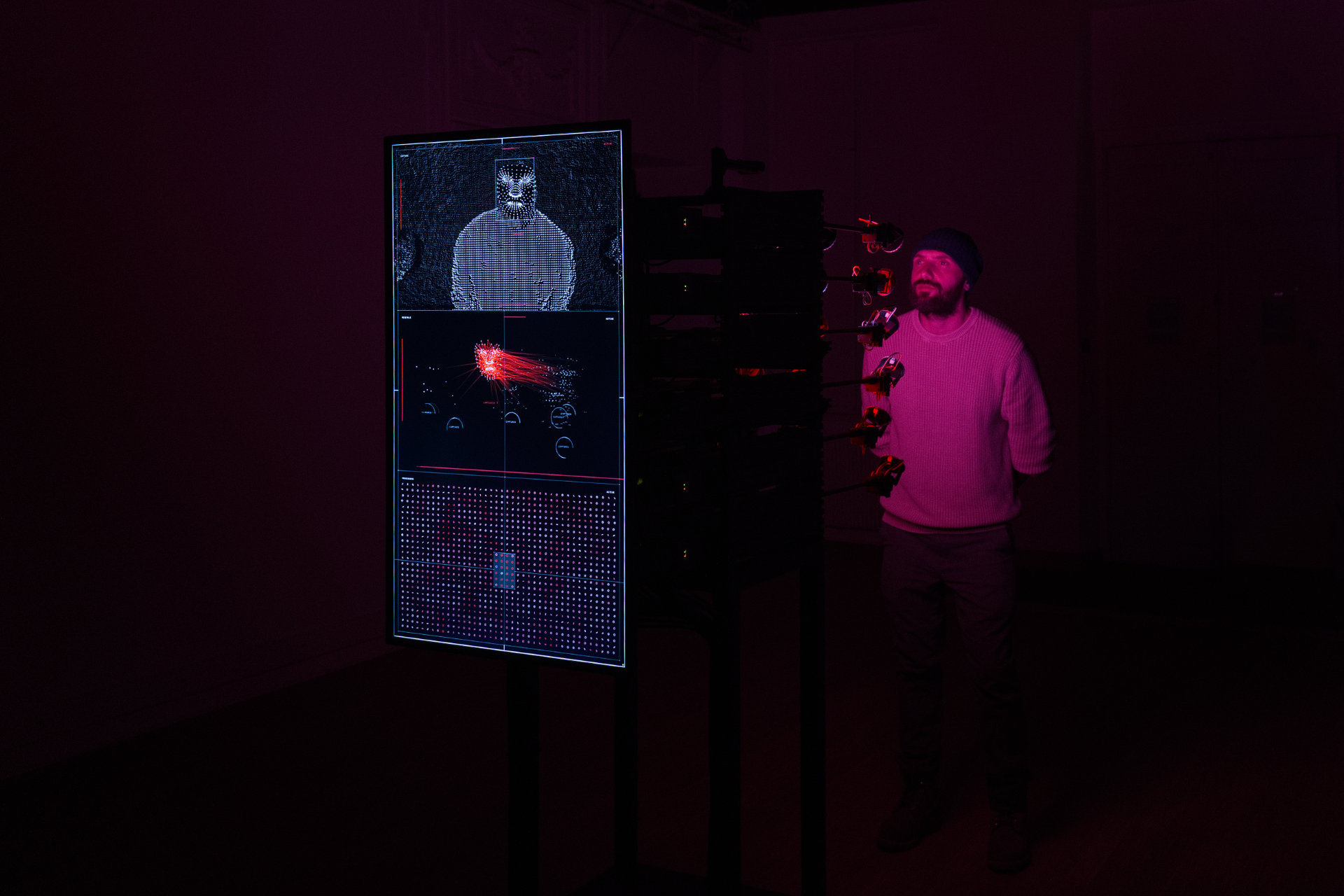
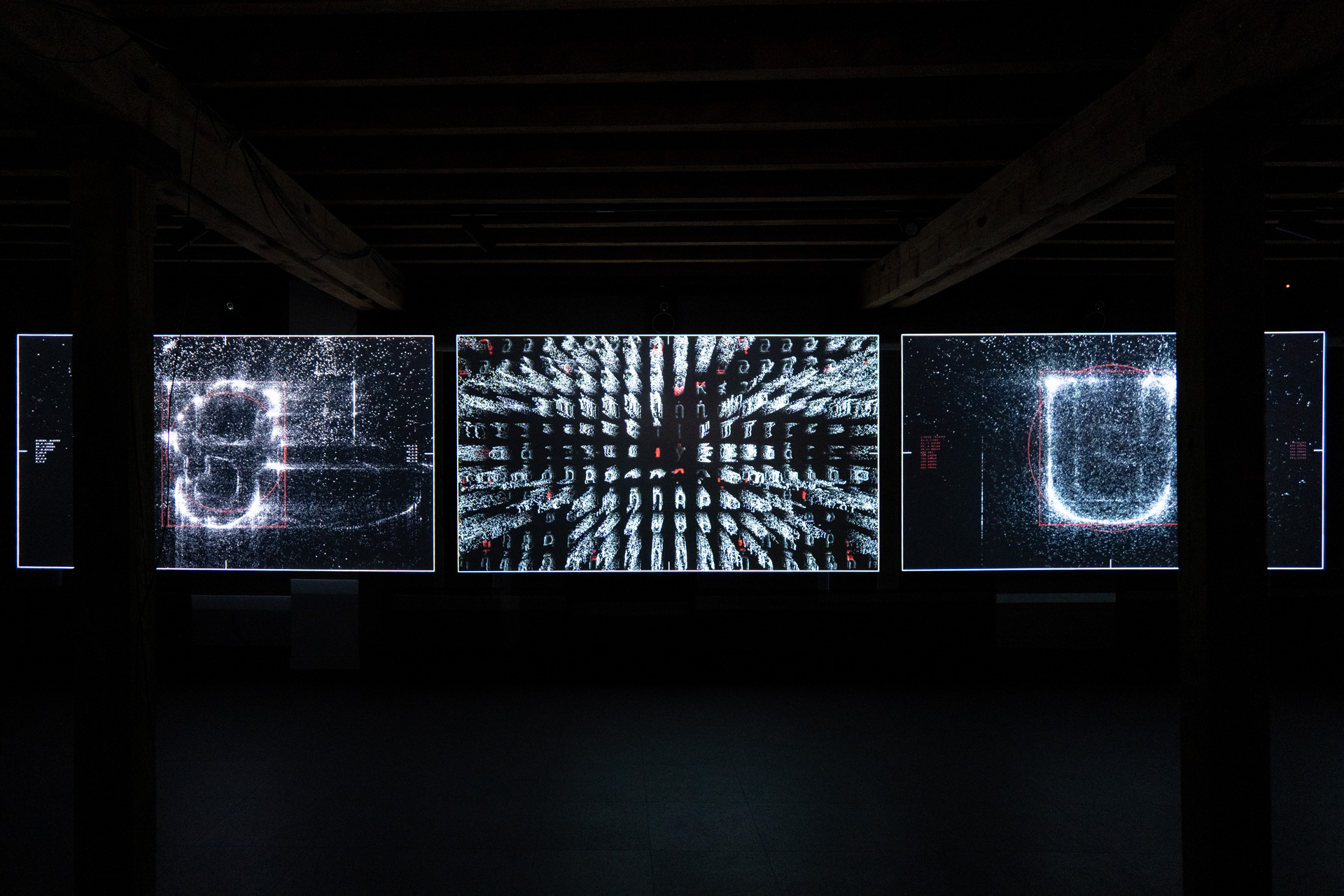
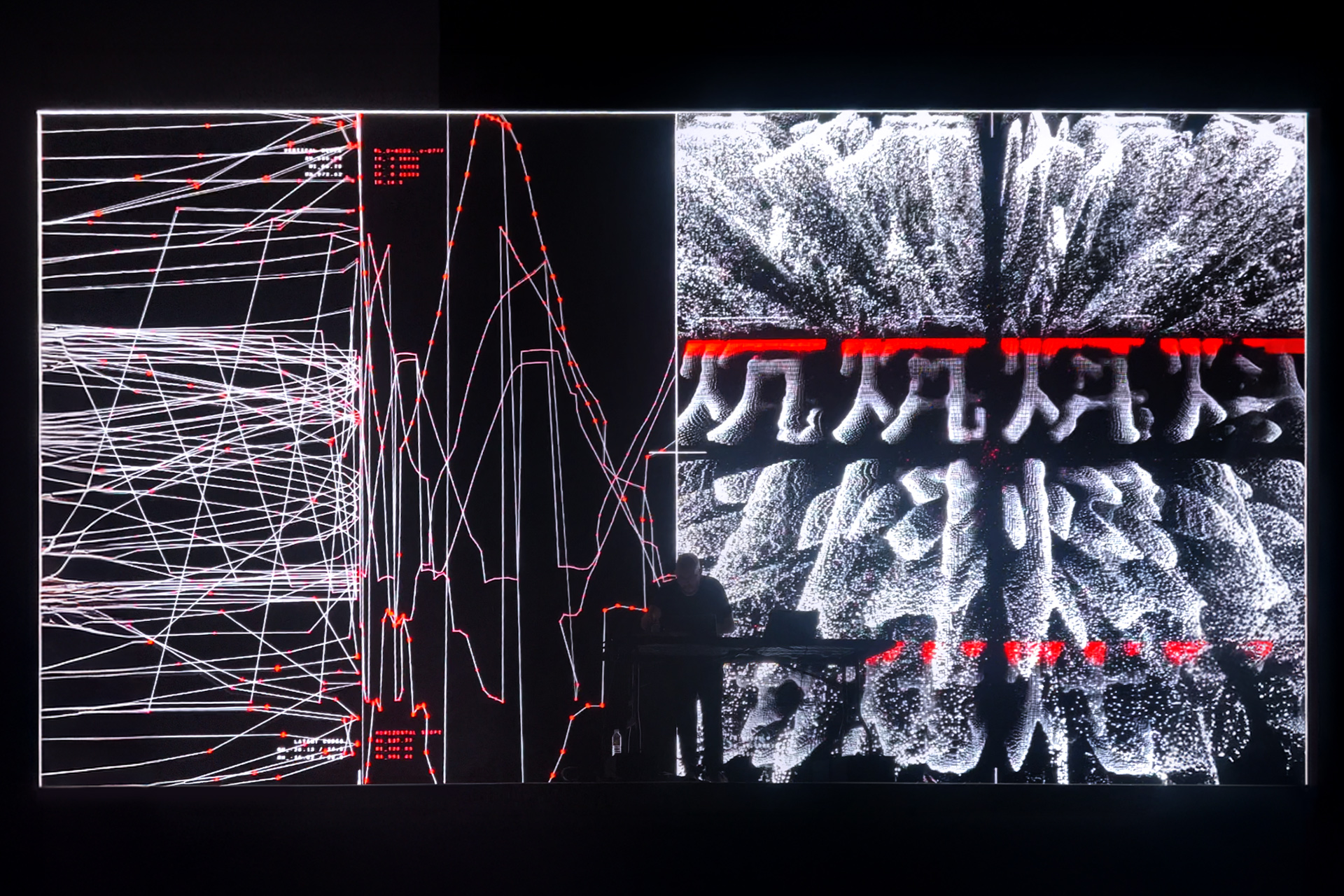
I see data as an aesthetic raw material, an intangible matter that can be transformed into something perceptual. For my work „Abstract Language Model (2022-2023)“, for instance, I used all characters represented in the Unicode Standard as a dataset. The idea was to create a conceptual shared semiotic system to build the foundation for a so called „trans-human / trans-machine“ language. I trained an artificial neural network on these characters and used the resulting models to explore the relationships between them.
What became interesting was the emerging infinite space between the existing characters — the fragments that weren't part of the original dataset but could only emerge through the machine's processing and interpolation, which I called „obscured variants“. And that is a fascinating aspect of working with data and neural networks: their ability to reveal inherent structures and relationships that humans cannot necessarily see or create. My interest lies in finding these invisible structures, making them tangible and manifesting my conceptual idea through images, sound, movement or physical objects.
Why do you think art and the role of the artist are important when it comes to innovation, particularly with AI?
I think artists contribute to innovation by approaching technologies without being bound by their intended purpose or by conventional ways of using them — in a sense, something that hacking culture has established as a concept. Art is a space for experimentation, speculation and questioning, and here technologies should be tested and used beyond their practical or commercial applications.
Rather than simply using AI because it is new, I explore its possibilities and limitations by treating it more as an instrument that can help me uncover perspectives that might not have been possible to see with a purely code-based algorithmic approach.
What do you want the viewer to take away from your work?
I’ve perpetually been drawn to that moment when something is almost understandable, but not quite. It puts you in an active position where you have to start interpreting. From my conversations with visitors over the years, I'm always amazed by how everyone sees something different in my works, shaped by their own worldview and individual perspective, and how multi-faceted the work becomes when viewed through the eyes of others. Ultimately, I see my works as a materialized statement of my conceptual idea in public space — an invitation to start a dialogue.