
Visual artist since 2005, Alex Le Guillou has been developing a world where art, science, and technology converge. Inspired by observations of nature, scientific phenomena, and contemporary technological systems, he creates audiovisual works and immersive experiences that are presented and exhibited in various venues around the world. Using real-world captures, LiDAR scans, and photogrammetry, he reconstructs natural landscapes as point clouds and offers a poetic and contemplative vision of the world, viewed through the lens of the machine. We spoke to Alex about his incredible artistic practice.
How would you describe your artistic practice?
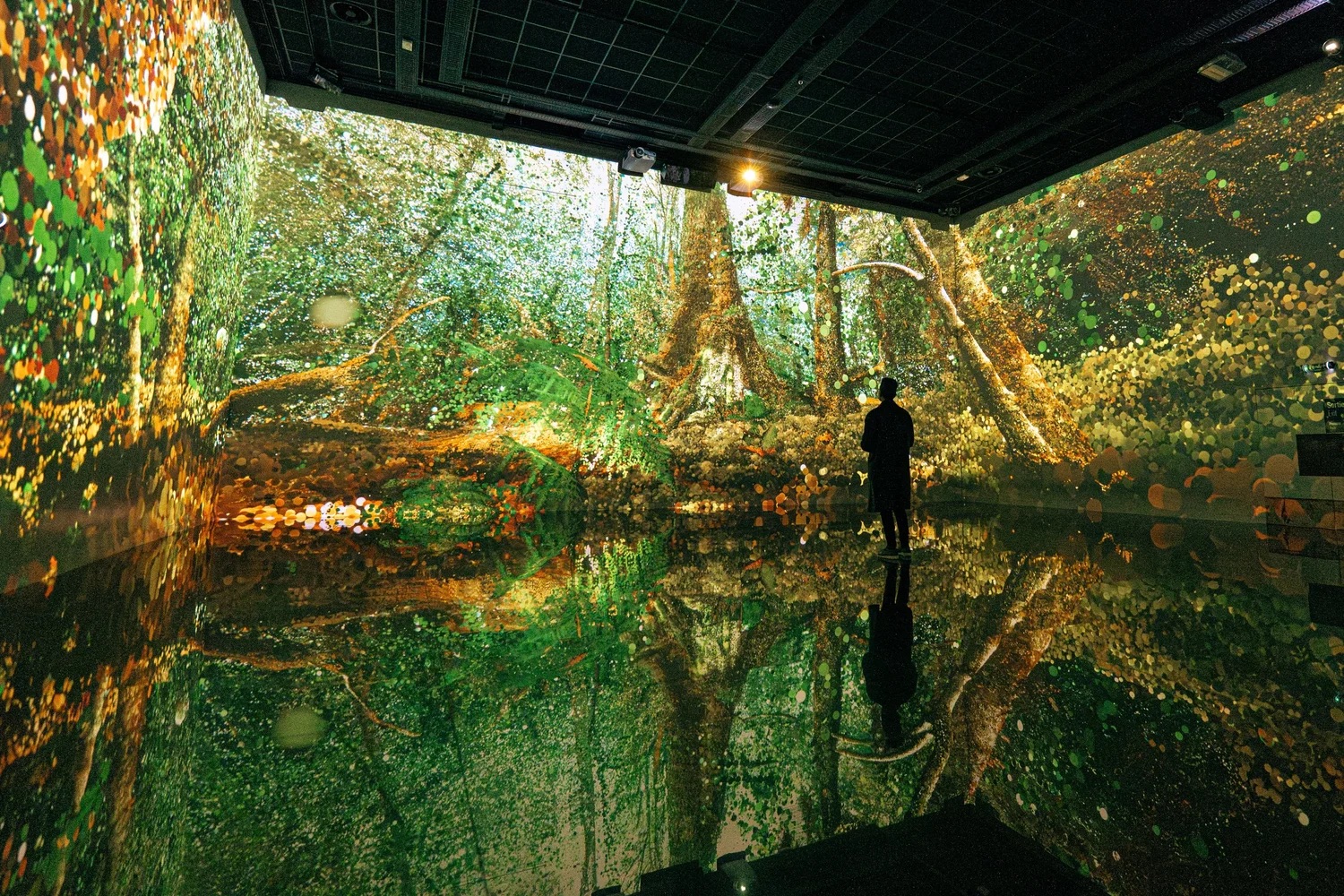
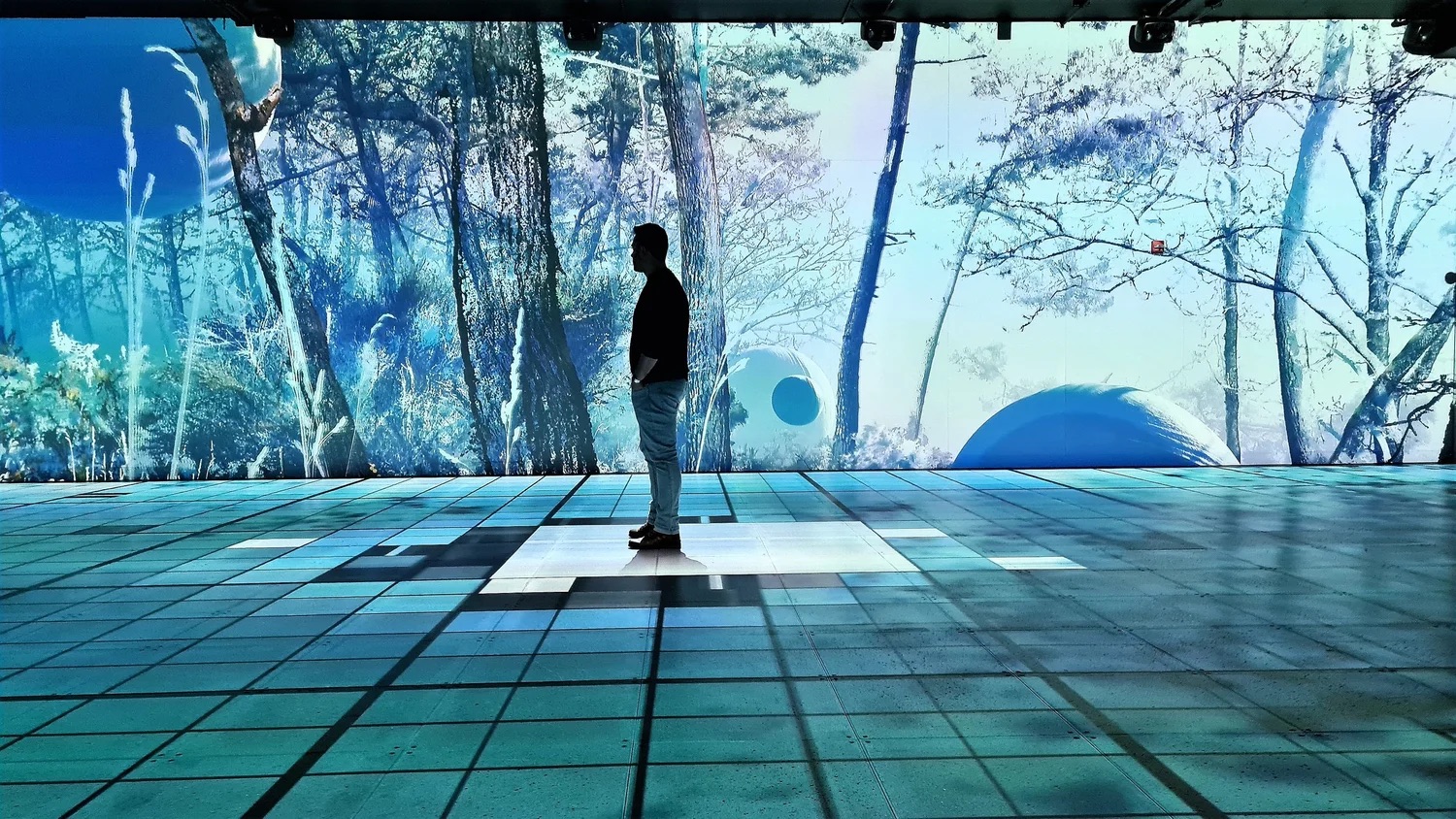
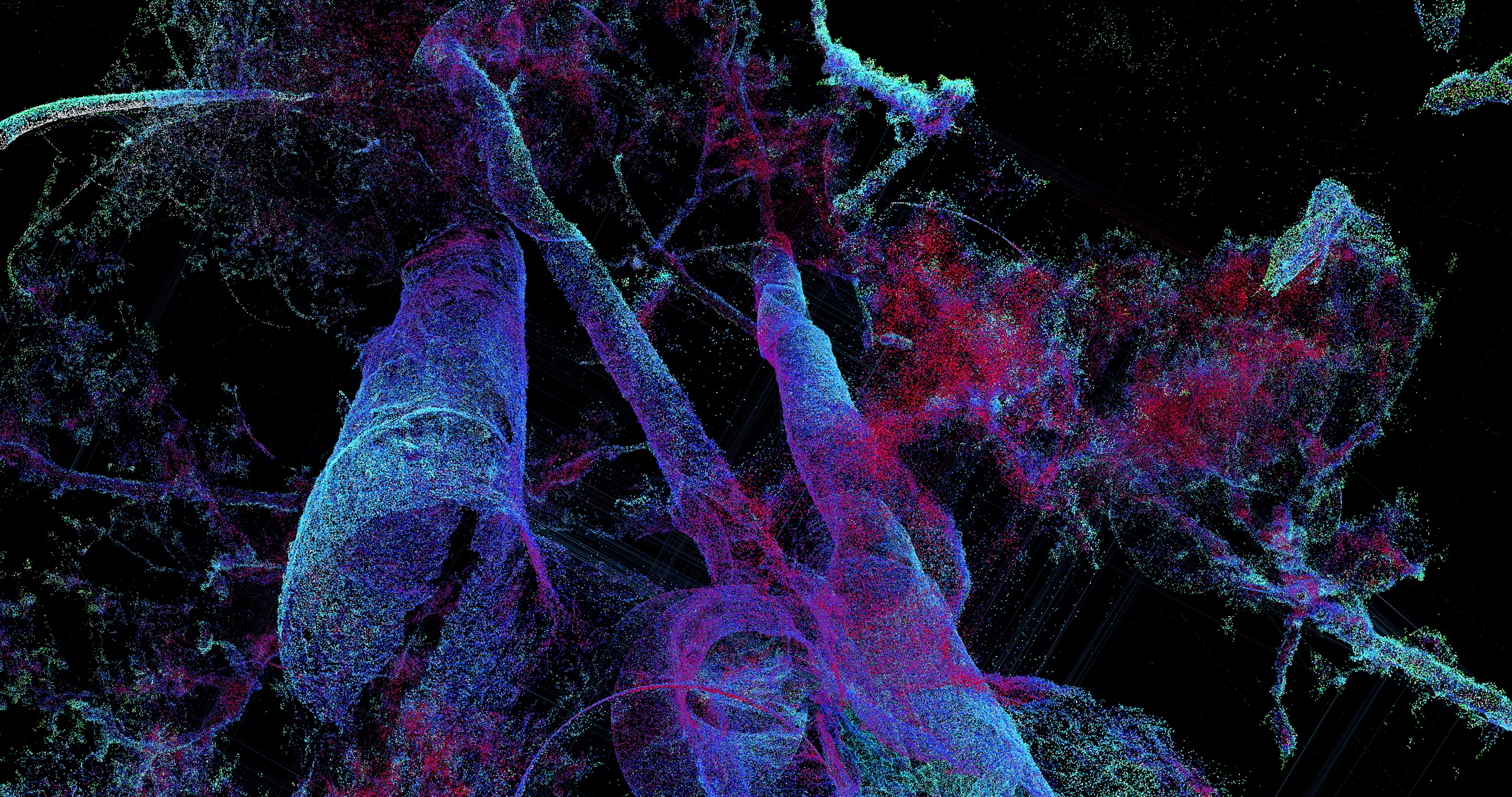
I use data and real-world imagery to create imaginary worlds. My work draws inspiration from scientific visualization and computer vision: what interests me is the machine’s perspective and the way it perceives and reconstructs the world. Specifically, I capture forests and landscapes using LiDAR scans and photogrammetry, then reconstruct them as point clouds. The result lies somewhere between the documentary and the imaginary: real places, fragmented and reassembled into spaces that have never quite existed. Whether it’s an immersive installation or a film, I seek to slow down the gaze and open up a contemplative experience of life.
How do you engage with, and create a connection with data in your work?
For me, data is never abstract: it consists of LiDAR scans, spatialized 3D data. When I scan a tree or a landscape, I record the exact geometry of a real place, its scale, its density, and the position of every point in space. This data preserves the memory of a specific moment and location. I treat it with care rather than as raw material to be cleaned up: I deliberately preserve the noise and imperfections of the scan, because that’s often where the image’s life lies. The connection I want to create is between the viewer and a place they may never visit, brought to life through its data.
What interests you about working with real-time graphics?
Even though the final render is often exported as a video, my entire workflow is based on real-time rendering technologies. What interests me is responsiveness: I change a parameter and immediately see the result, which leaves plenty of room for experimentation. I like to design “graphic systems” rather than a single image, setups that generate multiple variations and leave room for chance and the unexpected in the visuals. It’s often in these deviations that the most interesting images emerge. Real-time rendering keeps my work open and closely connected to the material.
How would you describe the relationship between art and innovation?
Innovation is never an end in itself: it’s a means to achieve an image or a sensation that didn’t exist before. New tools as LiDAR, Gaussian splatting, real-time engines, open up possibilities, but the vision always comes first. In fact, I develop many of my own tools so that the technology serves the project, not the other way around. And it’s often the limitations of a technique, its noise, its glitches, that produce something unexpected. I’m interested in innovation when it allows us to see something familiar, like a forest, in a new light.
What do you want the viewer to take away from your work?
An experience of the senses rather than a message. I seek to create a space for contemplation where the perception of time is transformed, where one feels present and fully immersed. If the viewer leaves feeling at peace, with a slightly fresh perspective on the world around them, then the work has achieved what I hoped it would.
